What Is Discounted Cash Flow (DCF) Valuation?
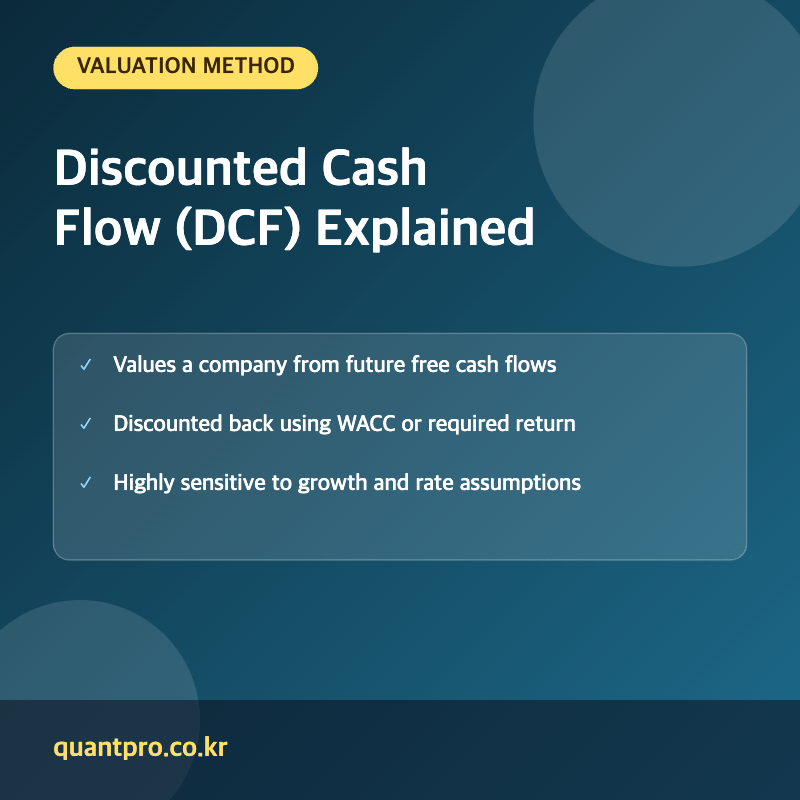
Discounted Cash Flow (DCF) valuation estimates a company’s intrinsic value by projecting its future free cash flows and discounting them back to their present value using a discount rate that reflects the time value of money and investment risk. The core principle is that a dollar received in the future is worth less than a dollar received today, so future cash flows must be adjusted downward to compare fairly with current value.
A typical DCF model forecasts free cash flow for a set number of years (often five to ten), calculates a terminal value to capture cash flows beyond the forecast period, and discounts both back to the present using the weighted average cost of capital (WACC) as the discount rate.
Why DCF Is Widely Used
Unlike relative valuation methods such as the P/E or EV/EBITDA multiples, which compare a company to its peers, DCF derives value directly from a company’s own expected cash generation, making it independent of potentially mispriced market comparables. This makes DCF a foundational tool for equity research analysts, investment bankers, and long-term investors seeking intrinsic value.
Key Limitations of the DCF Model
DCF valuations are highly sensitive to their underlying assumptions — small changes in the projected growth rate, discount rate, or terminal value multiple can swing the estimated value dramatically. Because of this sensitivity, DCF is often best used to establish a valuation range through scenario analysis rather than to produce a single precise number.
| Valuation Approach | Basis | Key Strength |
|---|---|---|
| DCF Valuation | Company’s own projected future cash flows | Independent of market comparables |
| Relative Valuation (P/E, EV/EBITDA) | Comparison to peer company multiples | Faster, reflects current market sentiment |
| Asset-Based Valuation | Net value of a company’s assets | Useful for asset-heavy or distressed companies |
Frequently Asked Questions
What discount rate should be used in a DCF model?
The weighted average cost of capital (WACC) is most commonly used as the discount rate for valuing the entire firm, since it reflects the blended cost of both debt and equity financing used to fund operations.
Why is terminal value such an important part of a DCF?
Terminal value often represents the majority of a DCF’s total estimated value, since it captures all cash flows beyond the explicit forecast period, which is why assumptions about long-term growth rates deserve careful scrutiny.
Is DCF valuation reliable for early-stage or unprofitable companies?
DCF becomes less reliable for companies with highly uncertain or negative near-term cash flows, since small changes in distant growth assumptions can produce wildly different valuations, making relative valuation methods sometimes more practical in these cases.
How is DCF different from the Dividend Discount Model?
The Dividend Discount Model values a stock based specifically on expected future dividends, while DCF values the broader business based on total free cash flow generated, making DCF applicable even to companies that pay no dividends.
Key Takeaways
Discounted Cash Flow valuation estimates intrinsic value by projecting and discounting a company’s future free cash flows, offering an independent alternative to market-based multiples, though its heavy reliance on growth and discount rate assumptions means results are best treated as a range. This article is for informational purposes only and does not constitute investment advice.

QuantPro: AI Finds the Trade Before You Do
From AI-powered chart analysis to real-time market intelligence — everything a serious investor needs, in one platform.
- Automated AI chart analysis with precision trend timing
- Bull Radar: real-time visualization of geopolitical & economic shifts
- Live market-moving news and insights, curated for you
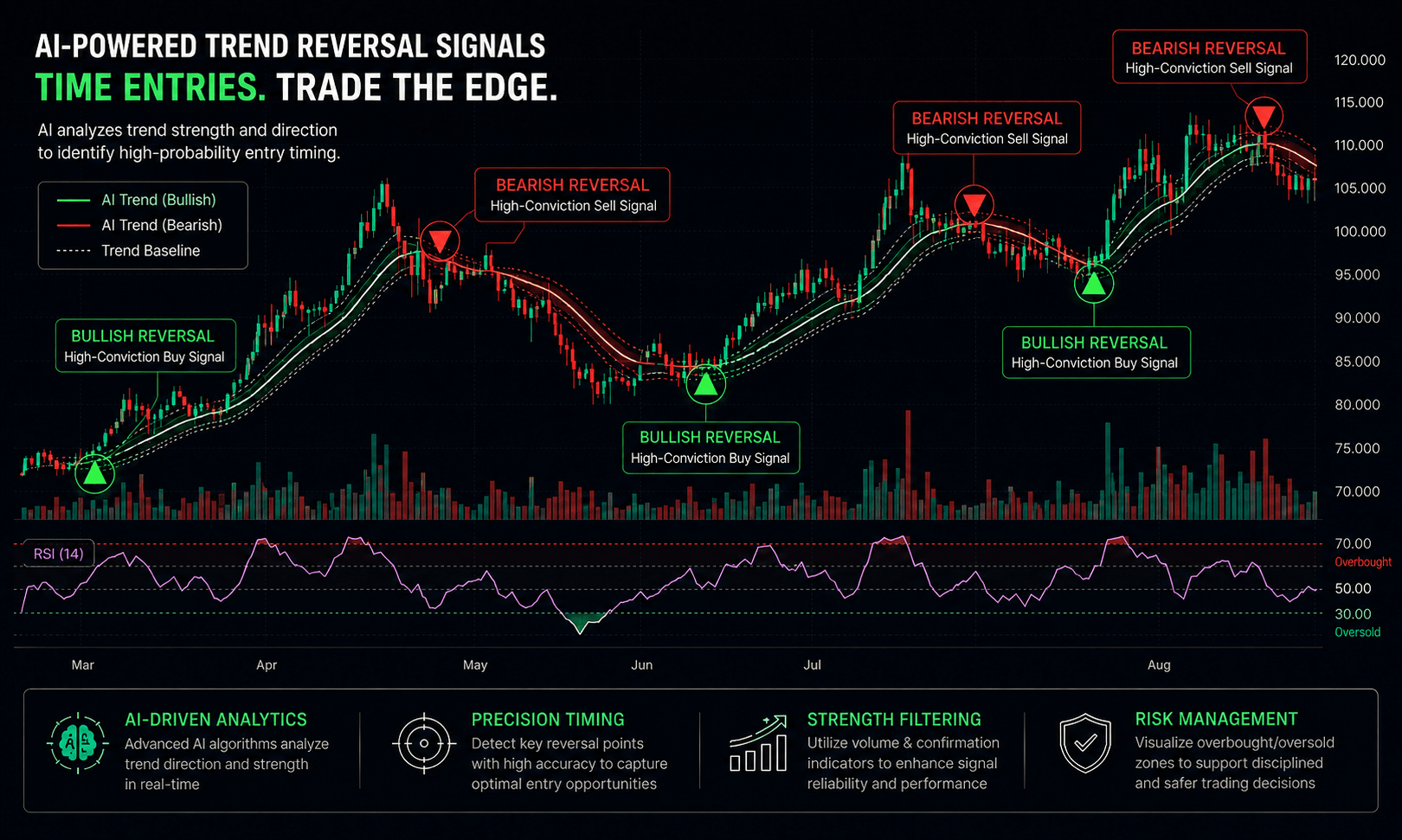
Bull Wave / Bear Wave Forecast Model
Engineered to help you read market direction and momentum faster than the crowd.
- Instantly separate bullish momentum from bearish pressure
- Pinpoint high-probability entry zones with confidence
- Chart signals clear enough for beginners, sharp enough for pros
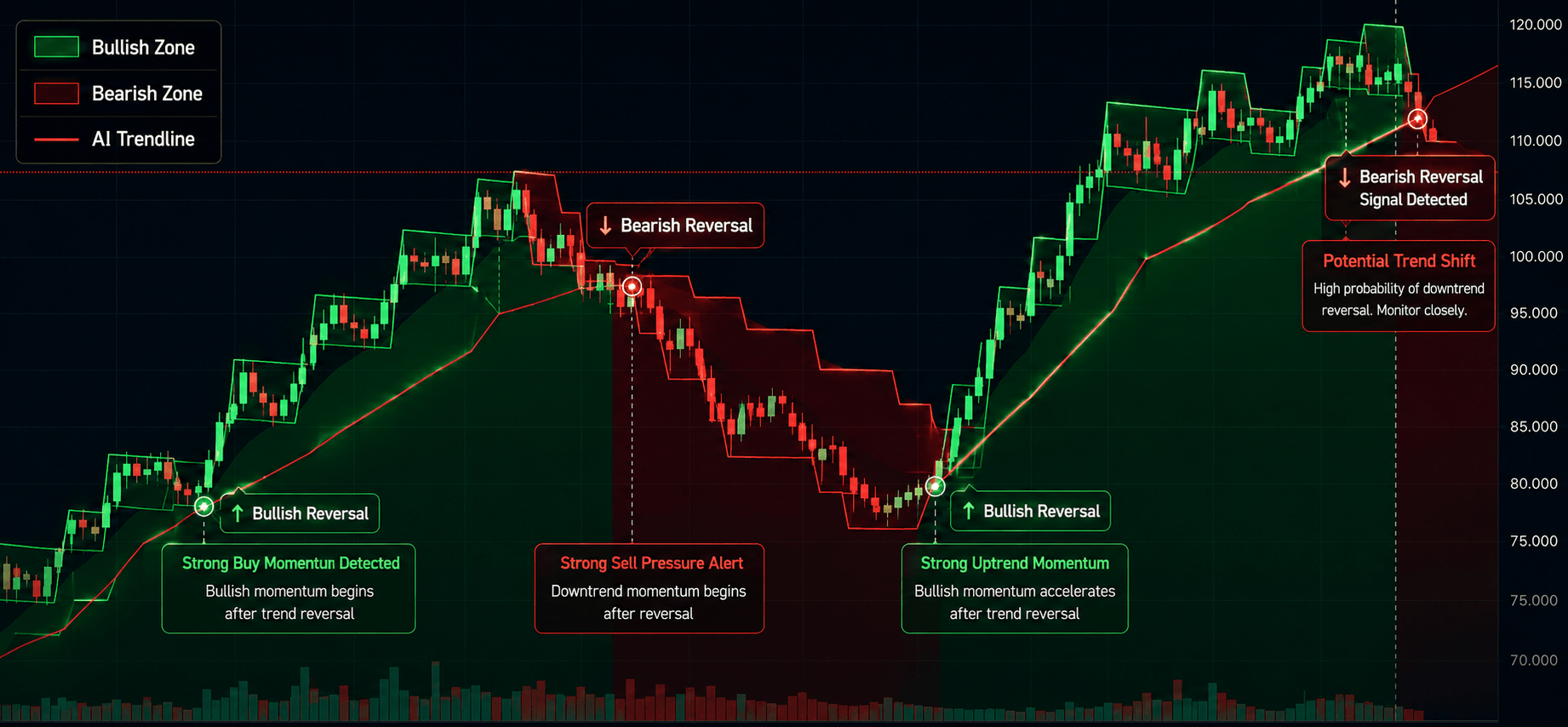
Winning Pattern Detection
Instantly surfaces the high-probability setups that repeat across the charts — a trusted edge for timing your entries and exits.
- Spot momentum building in real time
- Catch trend-reversal points before they break
- Built for active traders who need results, not theory

AI Live Economic Dashboard
AI analyzes real-time market data — turning complex, global investment flows into clear insight in seconds.
- Track global stock markets in real time
- See exactly which assets are strong — and which are fading
- Watch how geopolitical events move the markets
About the Author