What Is WACC (Weighted Average Cost of Capital)?
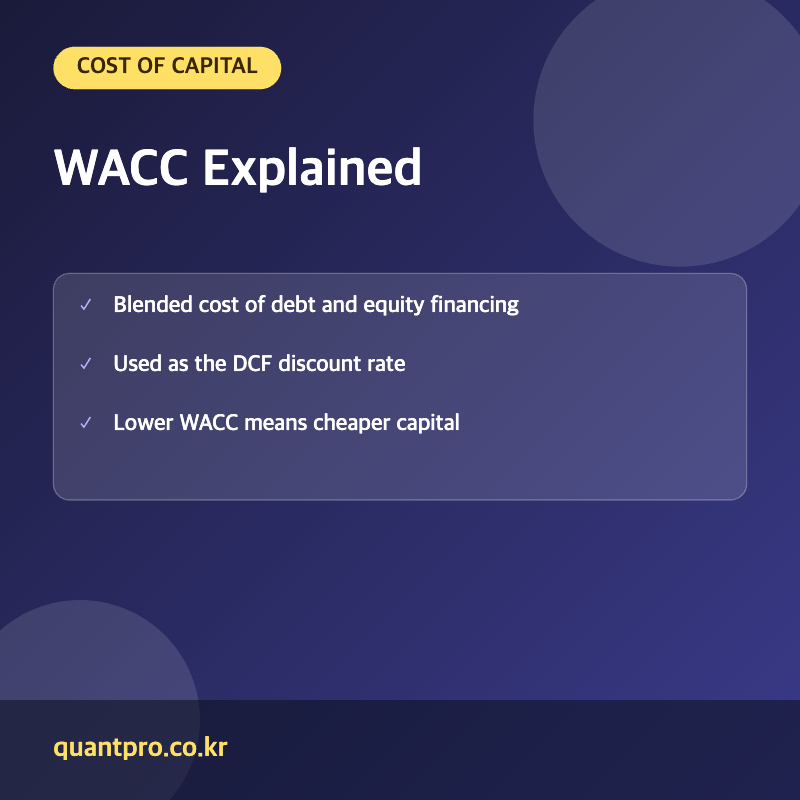
The Weighted Average Cost of Capital (WACC) represents the average rate a company must pay to finance its assets, blending the cost of equity and the after-tax cost of debt, weighted by their respective proportions in the company’s capital structure. The formula is WACC = (E/V × Re) + (D/V × Rd × (1 − Tax Rate)), where E and D are the market values of equity and debt, V is total capital, Re is the cost of equity, and Rd is the cost of debt.
WACC represents the minimum return a company must generate on its investments to satisfy both shareholders and debt holders, making it a critical benchmark for evaluating whether a project or the business as a whole is creating value.
Why WACC Matters for Valuation
WACC is most commonly used as the discount rate in Discounted Cash Flow (DCF) valuation models, converting future free cash flows into their present value. A lower WACC results in a higher valuation for the same projected cash flows, since future cash is discounted less heavily, which is why accurately estimating WACC is essential to a reliable DCF.
WACC as a Hurdle Rate
Beyond valuation, companies use WACC as a hurdle rate when deciding whether to pursue new projects or investments — if an investment’s expected return falls below WACC, it is expected to destroy value even if it generates a positive return, since that return doesn’t compensate investors adequately for the risk and cost of capital involved.
| Factor | Effect on WACC | Why It Matters |
|---|---|---|
| Higher proportion of debt (up to a point) | Can lower WACC | Debt is generally cheaper than equity, plus tax deductibility |
| Higher perceived business risk | Raises WACC | Investors demand higher returns for greater risk |
| Rising interest rates | Raises WACC | Increases both cost of debt and cost of equity |
Frequently Asked Questions
Why is the cost of debt adjusted for taxes in the WACC formula?
Interest payments on debt are tax-deductible, which effectively reduces the real cost of debt financing to the company, so WACC multiplies the cost of debt by (1 minus the tax rate) to reflect this tax shield.
Does more debt always lower WACC?
Not indefinitely — while debt is typically cheaper than equity up to a point, taking on excessive debt increases financial risk and can raise both the cost of debt and cost of equity, ultimately pushing WACC higher rather than lower.
How is the cost of equity typically estimated?
The cost of equity is most commonly estimated using the Capital Asset Pricing Model (CAPM), which factors in the risk-free rate, the stock’s beta, and the expected market risk premium.
What happens if ROIC is below WACC?
If a company’s return on invested capital falls below its WACC, it is effectively destroying economic value for its investors, even if it reports positive accounting profits, since the return doesn’t adequately compensate for the capital’s cost.
Key Takeaways
WACC represents the blended cost of a company’s debt and equity financing, serving as both the standard discount rate in DCF valuation and a hurdle rate for evaluating whether investments create genuine economic value. This article is for informational purposes only and does not constitute investment advice.

QuantPro: AI Finds the Trade Before You Do
From AI-powered chart analysis to real-time market intelligence — everything a serious investor needs, in one platform.
- Automated AI chart analysis with precision trend timing
- Bull Radar: real-time visualization of geopolitical & economic shifts
- Live market-moving news and insights, curated for you
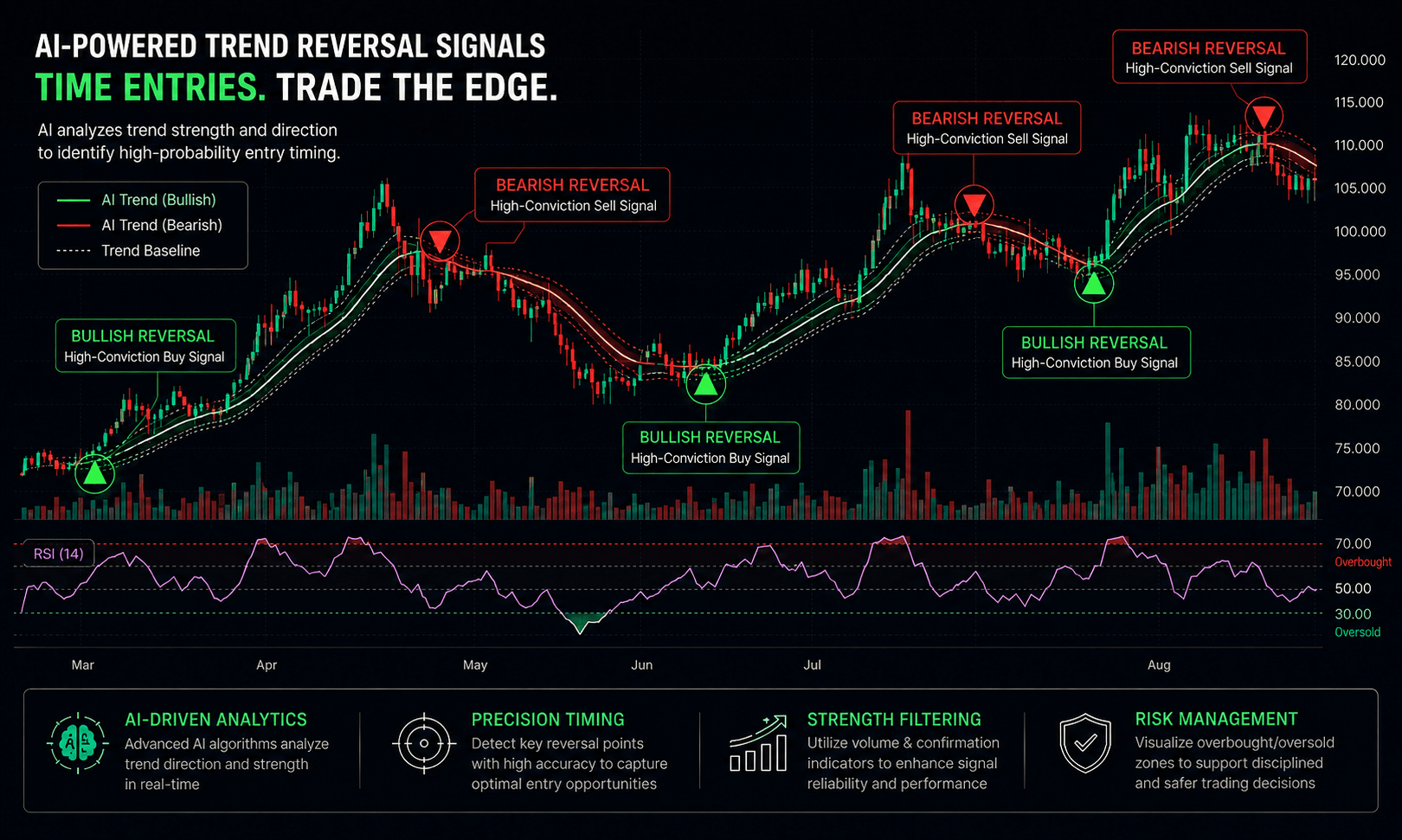
Bull Wave / Bear Wave Forecast Model
Engineered to help you read market direction and momentum faster than the crowd.
- Instantly separate bullish momentum from bearish pressure
- Pinpoint high-probability entry zones with confidence
- Chart signals clear enough for beginners, sharp enough for pros
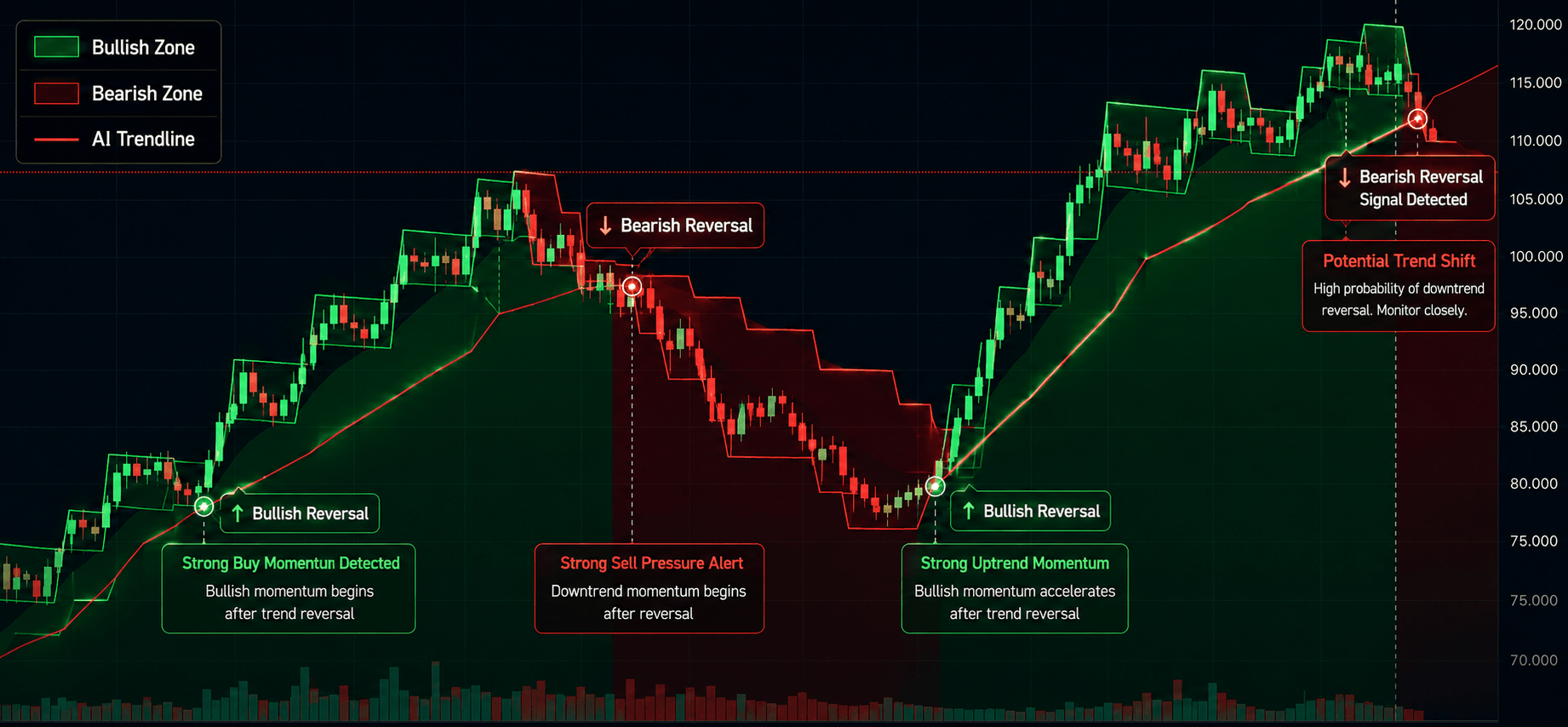
Winning Pattern Detection
Instantly surfaces the high-probability setups that repeat across the charts — a trusted edge for timing your entries and exits.
- Spot momentum building in real time
- Catch trend-reversal points before they break
- Built for active traders who need results, not theory

AI Live Economic Dashboard
AI analyzes real-time market data — turning complex, global investment flows into clear insight in seconds.
- Track global stock markets in real time
- See exactly which assets are strong — and which are fading
- Watch how geopolitical events move the markets
About the Author