What Is the Dividend Discount Model?
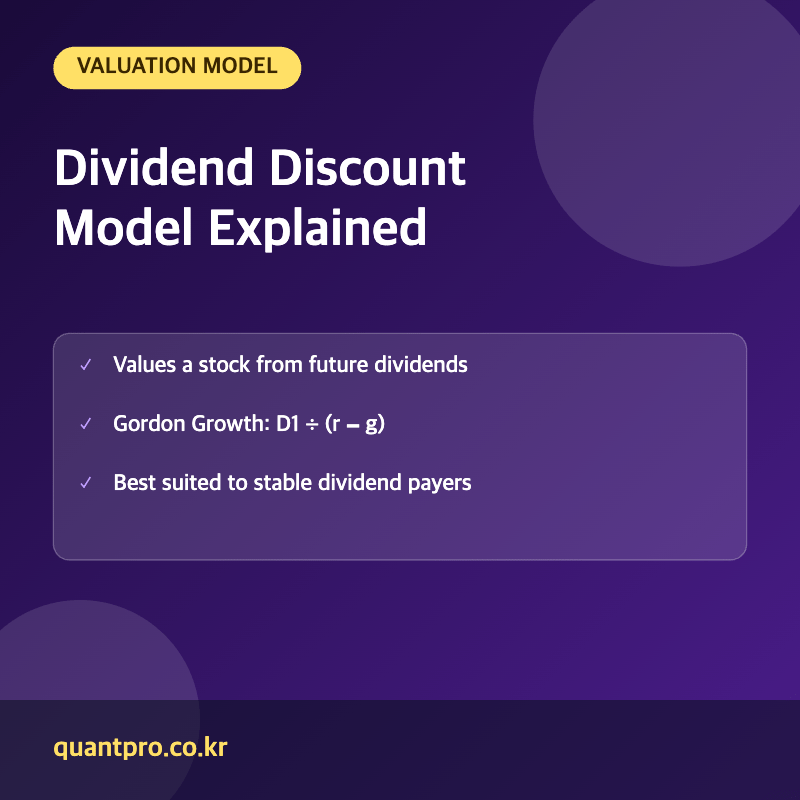
The Dividend Discount Model (DDM) is a valuation method that estimates a stock’s intrinsic value based on the present value of its expected future dividend payments. The core idea is that a stock is worth the sum of all its future dividends, discounted back to today’s value using an appropriate required rate of return.
The most commonly used version, the Gordon Growth Model, assumes dividends grow at a constant rate forever, simplifying the valuation to a single formula: Stock Value = D1 ÷ (r − g), where D1 is next year’s expected dividend, r is the required rate of return, and g is the constant dividend growth rate.
When the Dividend Discount Model Works Well
The DDM is most useful for valuing mature, stable companies with a long history of consistent dividend payments and predictable growth, such as utilities or established consumer staples companies. Because the model depends entirely on dividend payments, it is poorly suited for companies that pay no dividends or have highly unpredictable payout policies.
Limitations of the Dividend Discount Model
The model is highly sensitive to its assumptions — small changes in the assumed growth rate or required return can produce dramatically different valuations, and the formula breaks down mathematically if the growth rate approaches or exceeds the required rate of return. It also cannot be meaningfully applied to non-dividend-paying growth companies.
| Company Type | DDM Suitability | Reason |
|---|---|---|
| Mature dividend payers (utilities, staples) | Well suited | Stable, predictable dividend history and growth |
| Cyclical or inconsistent dividend payers | Limited suitability | Unpredictable payouts undermine growth assumptions |
| Non-dividend-paying growth companies | Not suitable | Model requires dividends as its core input |
Frequently Asked Questions
Can the Dividend Discount Model be used for growth stocks that don’t pay dividends?
No, the basic DDM requires dividend payments as its core input, so it cannot be applied directly to companies that retain all earnings for reinvestment — other valuation methods like discounted cash flow analysis are more appropriate in those cases.
What happens if the growth rate exceeds the required rate of return?
The Gordon Growth Model formula becomes mathematically invalid (producing a negative or undefined value) if the assumed growth rate equals or exceeds the required rate of return, which signals the underlying growth assumption is unrealistic for a perpetual model.
How sensitive is the DDM to its inputs?
Very sensitive — because the growth rate and required return sit in the denominator’s difference, even small adjustments to either assumption can swing the estimated value substantially, so results should be treated as a range rather than a precise figure.
Are there more advanced versions of the DDM?
Yes, multi-stage DDM models allow for different growth rates across distinct time periods — for example, a high initial growth phase followed by a stable long-term growth rate — offering more flexibility than the single-stage Gordon Growth Model.
Key Takeaways
The Dividend Discount Model values a stock based on the present value of its expected future dividends, working best for mature companies with stable dividend histories, though its heavy reliance on growth and rate assumptions makes it highly sensitive to input changes. This article is for informational purposes only and does not constitute investment advice.

QuantPro: AI Finds the Trade Before You Do
From AI-powered chart analysis to real-time market intelligence — everything a serious investor needs, in one platform.
- Automated AI chart analysis with precision trend timing
- Bull Radar: real-time visualization of geopolitical & economic shifts
- Live market-moving news and insights, curated for you
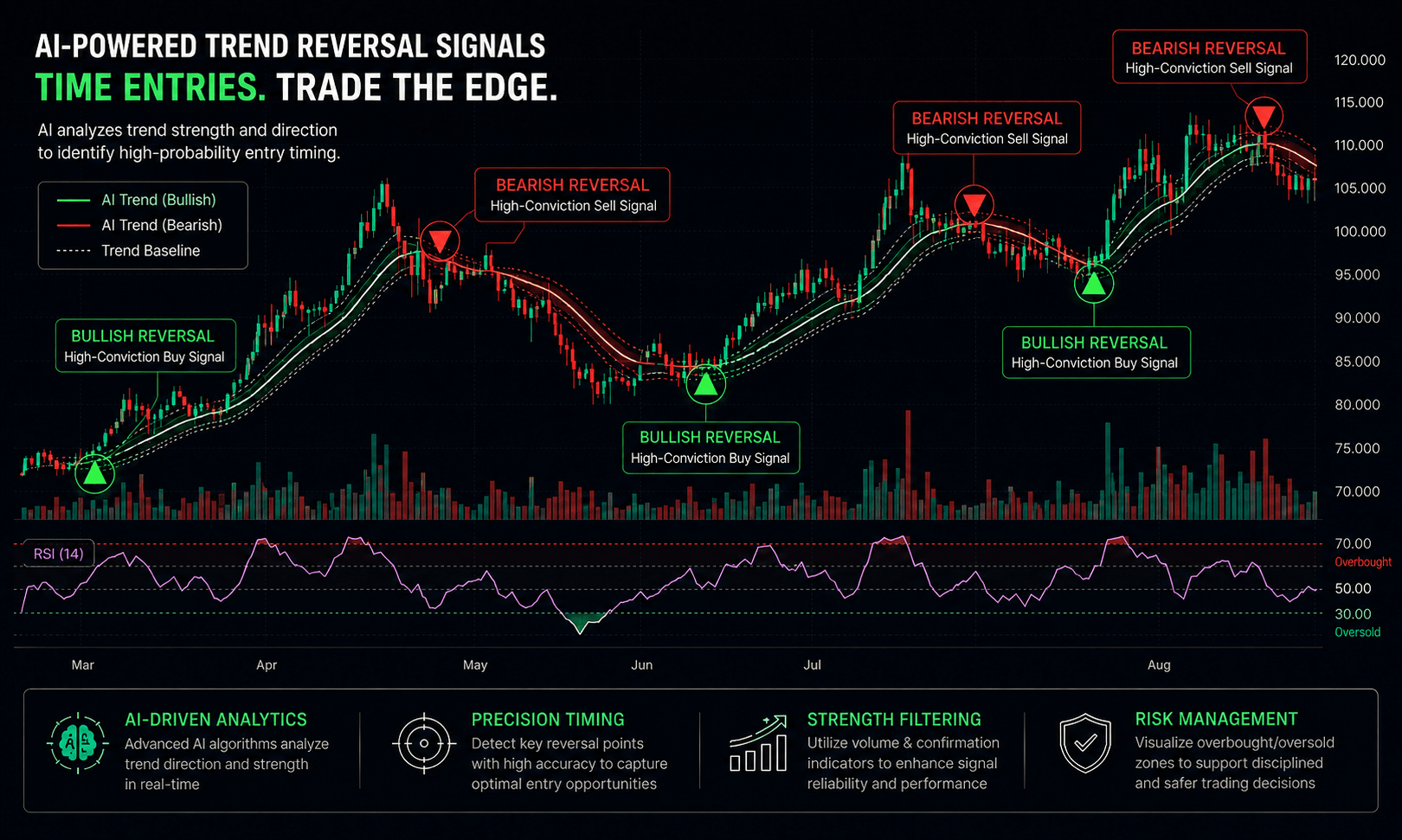
Bull Wave / Bear Wave Forecast Model
Engineered to help you read market direction and momentum faster than the crowd.
- Instantly separate bullish momentum from bearish pressure
- Pinpoint high-probability entry zones with confidence
- Chart signals clear enough for beginners, sharp enough for pros
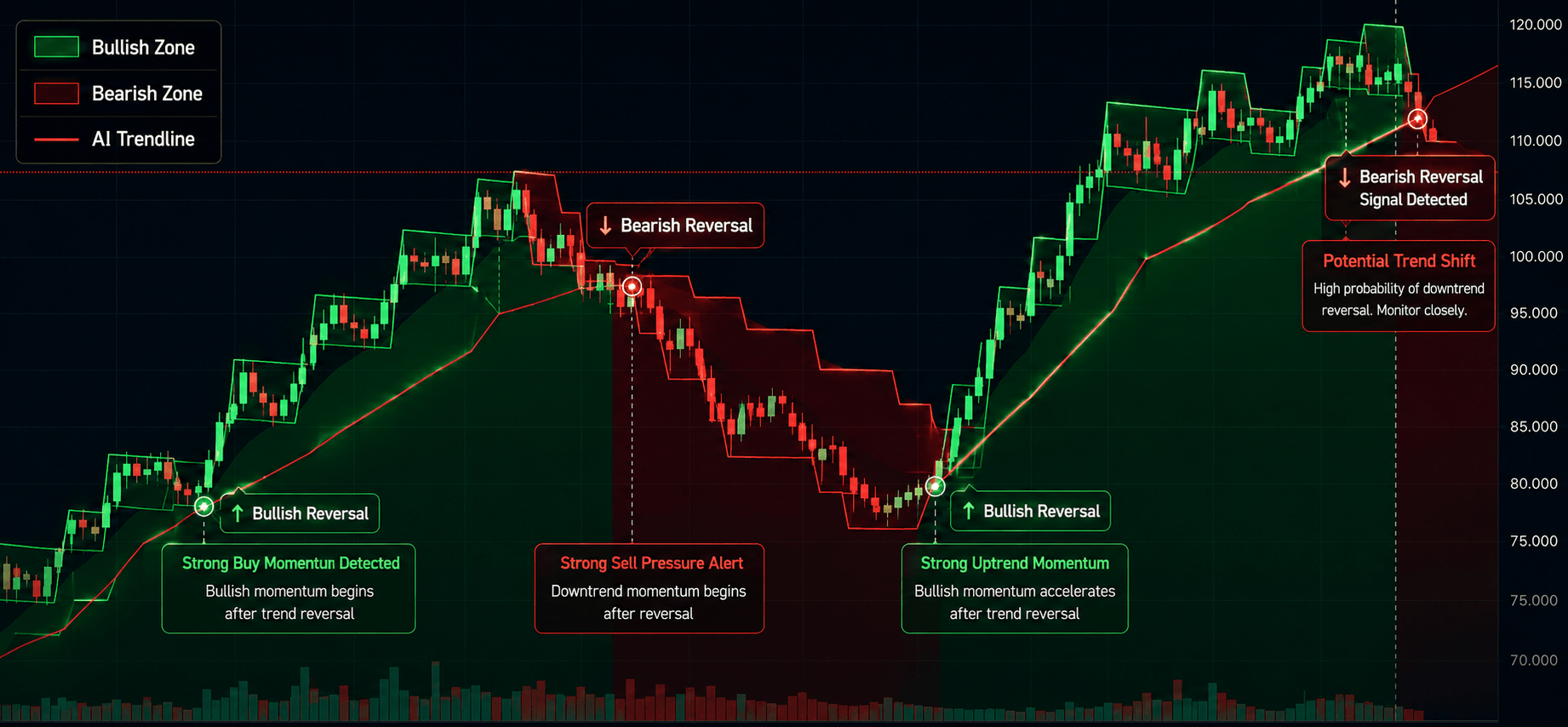
Winning Pattern Detection
Instantly surfaces the high-probability setups that repeat across the charts — a trusted edge for timing your entries and exits.
- Spot momentum building in real time
- Catch trend-reversal points before they break
- Built for active traders who need results, not theory

AI Live Economic Dashboard
AI analyzes real-time market data — turning complex, global investment flows into clear insight in seconds.
- Track global stock markets in real time
- See exactly which assets are strong — and which are fading
- Watch how geopolitical events move the markets
About the Author