What Is the Dividend Payout Ratio?
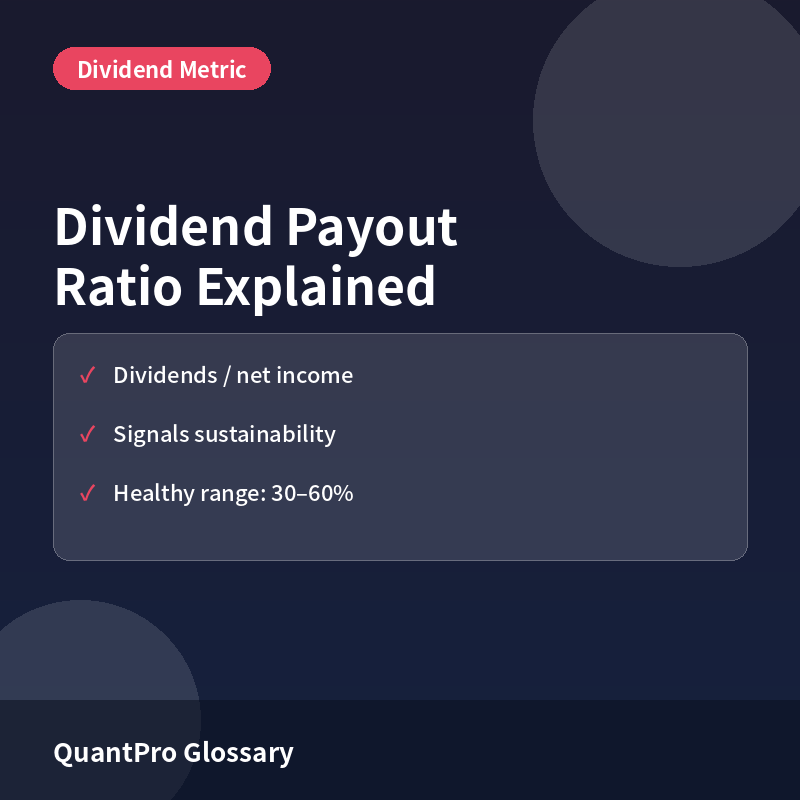
The dividend payout ratio shows what portion of a company’s net income is returned to shareholders as dividends. It reveals whether a company favors reinvestment or shareholder returns, and for income investors it’s a starting point for judging whether the current dividend is likely to hold up.
The Payout Ratio Formula
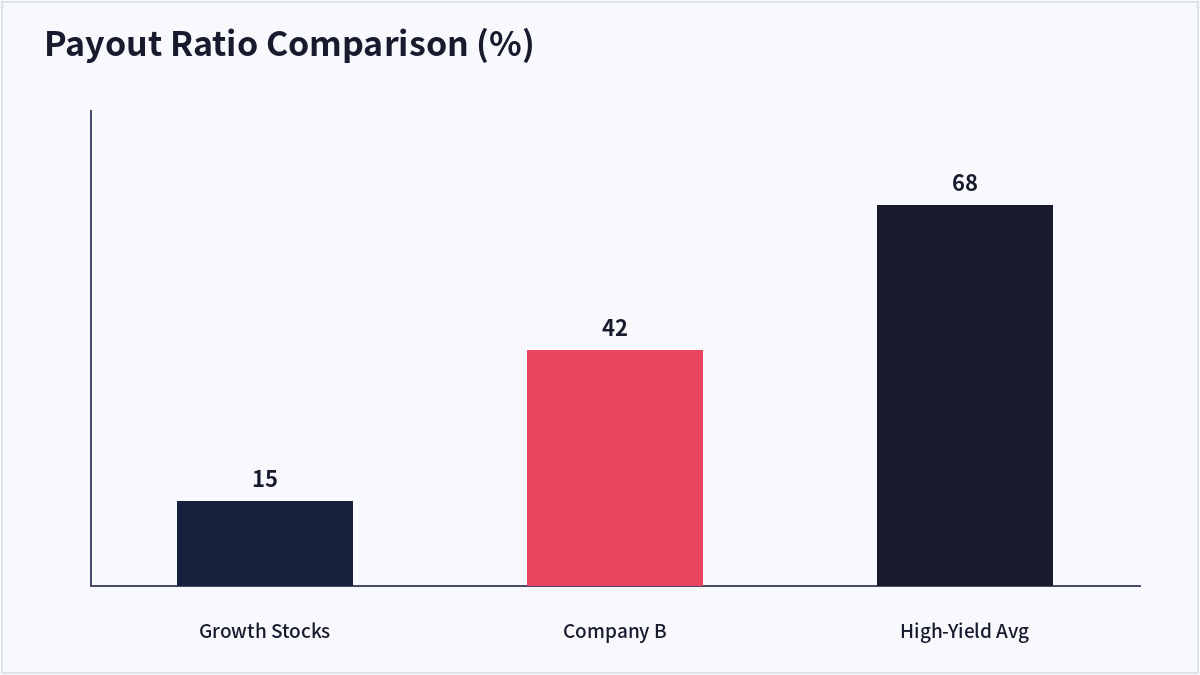
The formula is: Total Dividends Paid / Net Income × 100. If Company B earned $50M in net income and paid out $21M in dividends, its payout ratio is $21M divided by $50M, or 42%. On a per-share basis, the same result comes from dividing dividend per share (DPS) by earnings per share (EPS).
Payout Ratio and Retention Rate
If the payout ratio is 42%, the remaining 58% (the retention rate) stays with the company to fund growth or reduce debt. A higher retention rate means more capital for reinvestment but a smaller shareholder return, so the right balance depends on whether an investor is prioritizing growth or income.
What Counts as a Healthy Payout Ratio
A payout ratio between roughly 30% and 60% is generally seen as a reasonable balance between reinvestment and shareholder returns. A ratio above 100% means the company paid out more than it earned that year, which can be a warning sign of an unsustainable dividend policy or a temporary earnings dip. REITs are a notable exception, since they’re legally required to distribute at least 90% of taxable income.
Interpreting a Falling Payout Ratio
A payout ratio that declines year over year isn’t necessarily bad news — it can simply mean net income grew faster than the dividend. But if the dividend itself was cut, that’s a stronger signal of underlying cash flow stress worth investigating in the financial statements.
| Category | Growth Stocks | Company B | High-Yield Avg |
|---|---|---|---|
| Payout Ratio | 15% | 42% | 68% |
| Profile | Reinvestment-focused | Balanced | Income-focused |
Frequently Asked Questions
Does a higher payout ratio always mean a better investment?
Not necessarily — an unusually high payout ratio can signal limited reinvestment capacity or an unsustainable policy masking declining earnings, so it should be checked against income and cash flow trends.
What does a payout ratio above 100% mean?
It means the company distributed more than its net income for the year, often funded from retained earnings or a temporary earnings drop, and warrants watching subsequent quarters closely.
How is the payout ratio different from dividend yield?
Payout ratio measures dividends relative to earnings and speaks to sustainability, while dividend yield measures dividends relative to share price and speaks to current income attractiveness — the two are best read together.
Does the ideal payout ratio vary by industry?
Yes. Early-stage growth and tech companies often have low or zero payout ratios, while utilities, telecoms, and REITs with stable cash flows tend to run structurally higher ratios.
Key Takeaways
The dividend payout ratio measures dividends paid as a share of net income, and a range of roughly 30–60% generally reflects a healthy balance between growth and shareholder returns. Ratios above 100% or unusually high levels warrant checking cash flow to confirm the dividend is sustainable. This article is for informational purposes only and does not constitute investment advice.

QuantPro: AI Finds the Trade Before You Do
From AI-powered chart analysis to real-time market intelligence — everything a serious investor needs, in one platform.
- Automated AI chart analysis with precision trend timing
- Bull Radar: real-time visualization of geopolitical & economic shifts
- Live market-moving news and insights, curated for you
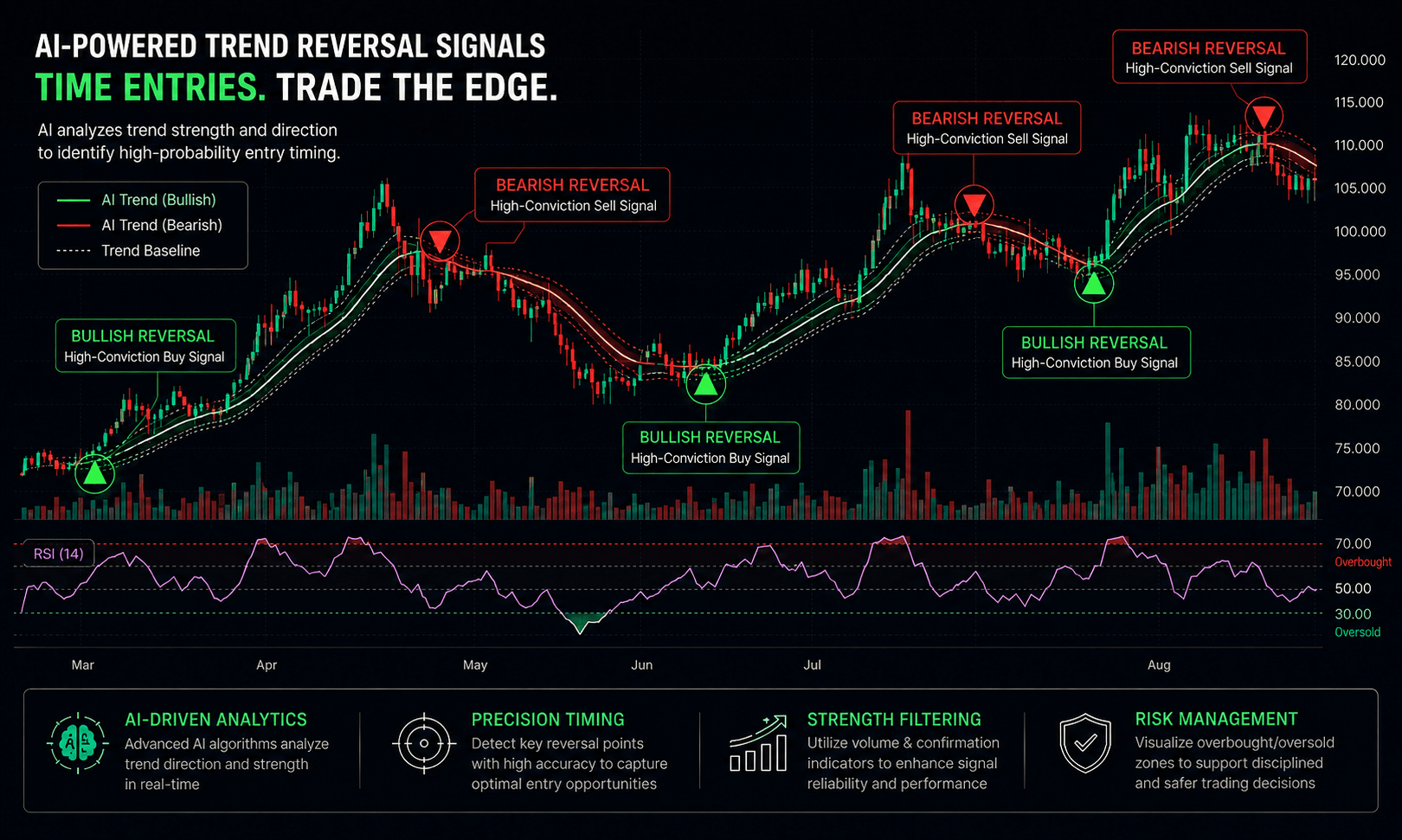
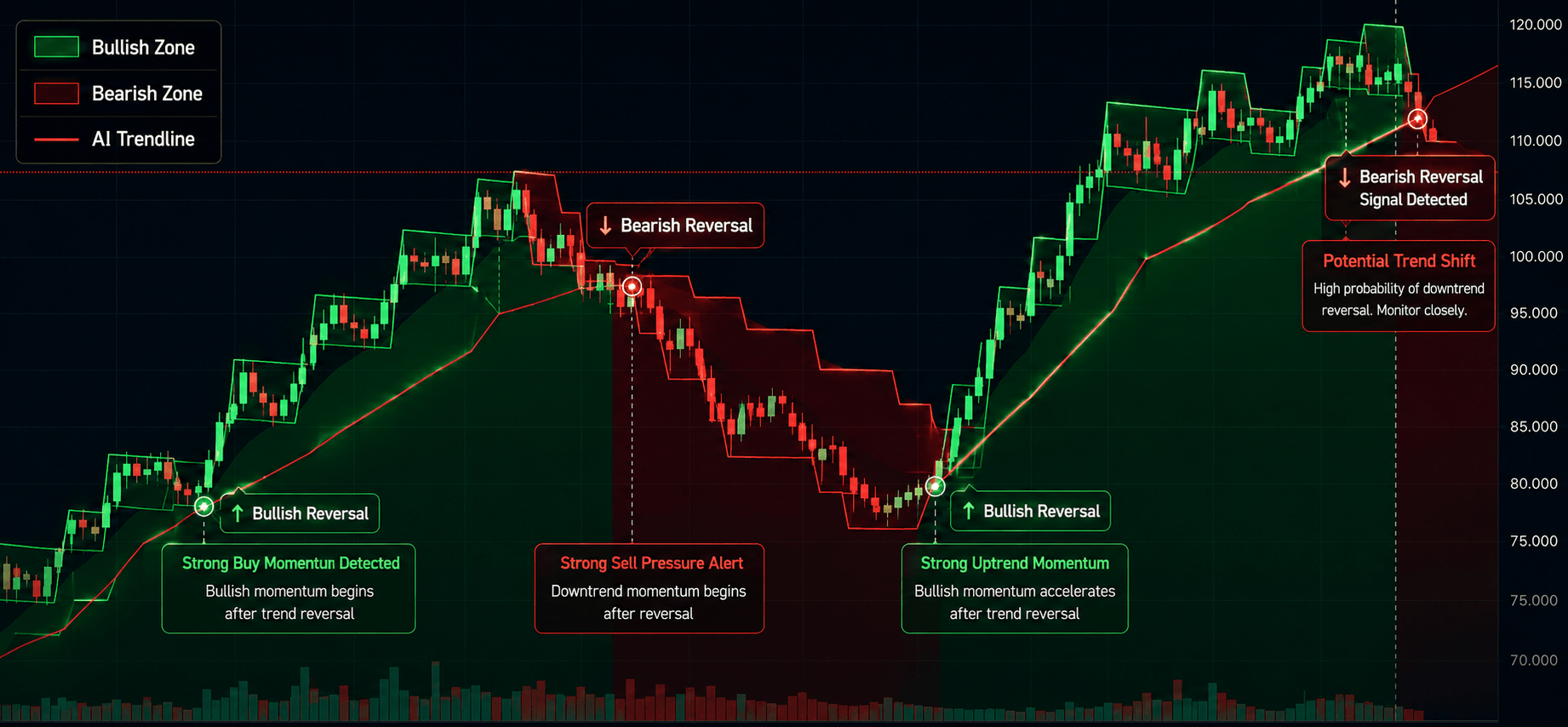
Bull Wave / Bear Wave Forecast Model
Engineered to help you read market direction and momentum faster than the crowd.
- Instantly separate bullish momentum from bearish pressure
- Pinpoint high-probability entry zones with confidence
- Chart signals clear enough for beginners, sharp enough for pros
Winning Pattern Detection
Instantly surfaces the high-probability setups that repeat across the charts — a trusted edge for timing your entries and exits.
- Spot momentum building in real time
- Catch trend-reversal points before they break
- Built for active traders who need results, not theory

AI Live Economic Dashboard
AI analyzes real-time market data — turning complex, global investment flows into clear insight in seconds.
- Track global stock markets in real time
- See exactly which assets are strong — and which are fading
- Watch how geopolitical events move the markets
About the Author