What Is Dividend Yield?
Definition and Core Concept
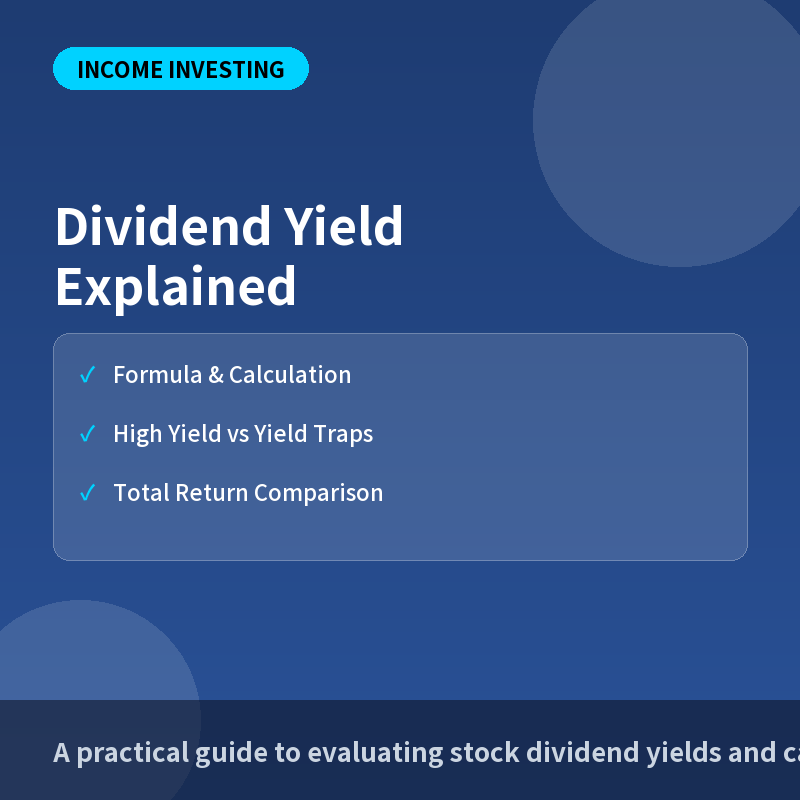
Dividend yield is a financial ratio that shows how much a company pays out in dividends each year relative to its current share price. Expressed as a percentage, it measures the cash return an investor earns strictly from dividends for every dollar invested in the stock. For equity investors seeking income, dividend yield serves as a baseline metric to evaluate passive cash flows across different asset classes.
Dividend Distribution Frequency
Companies distribute dividends on various schedules, such as quarterly, semi-annually, or annually. In mature markets like the United States, quarterly dividend distributions are standard. Regardless of payout frequency, dividend yield is calculated on an annualized basis to maintain consistency across comparisons.
How Dividend Yield Is Calculated
The Fundamental Dividend Yield Formula
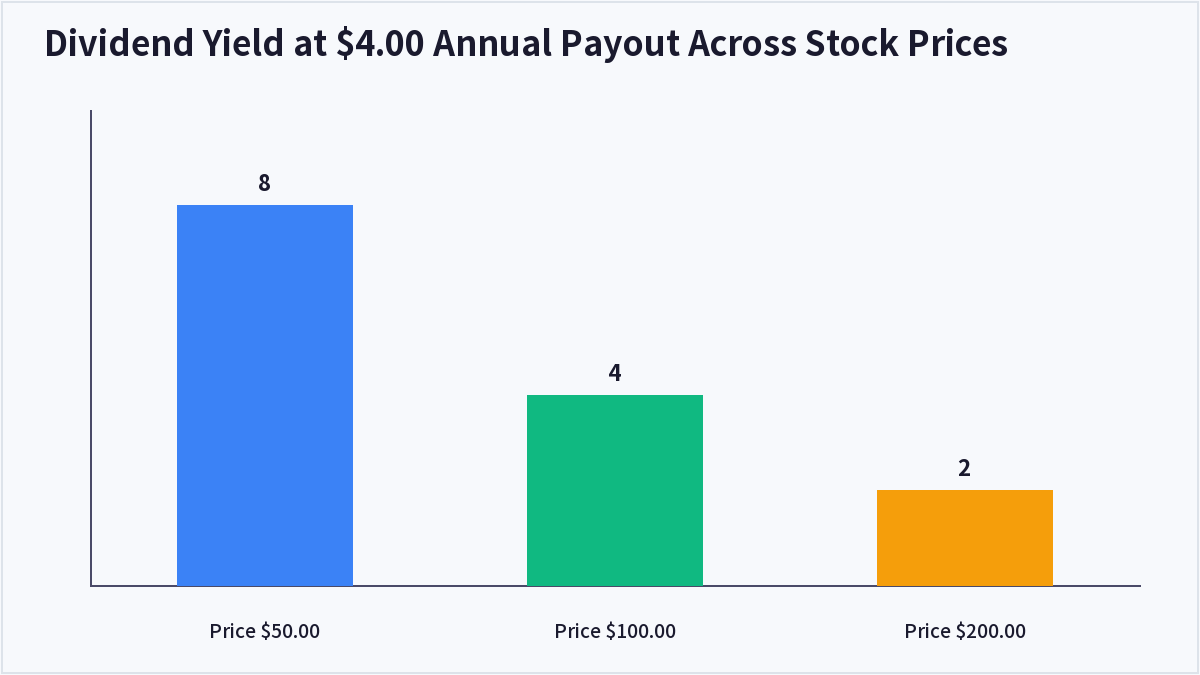
To calculate dividend yield, divide the total annual dividend per share by the current stock price and multiply by 100. Mathematically, it is expressed as Dividend Yield = (Annual Dividend per Share / Current Stock Price) * 100. For example, consider a company that pays $4.00 in annual dividends per share. If its current stock price is $100.00, the dividend yield is 4.0%. If the stock price decreases to $50.00 while the annual payout remains $4.00, the yield rises to 8.0%. Conversely, if the stock price surges to $200.00, the yield drops to 2.0%.
Trailing vs Forward Dividend Yield
Investors use two primary methods to evaluate yield: trailing dividend yield and forward dividend yield. Trailing yield looks backward at the sum of actual dividends paid over the trailing twelve months (TTM). Forward yield estimates future income by annualizing the most recent payout and dividing it by the present share price.
Why Dividend Yield Matters to Investors
Generating Cash Flow and Reducing Volatility
Dividend yield offers income-focused investors a regular income stream that can supplement cash flow or be reinvested to compound wealth. During market downturns, high-quality dividend payments help cushion total portfolio returns against severe capital losses.
Identifying High Yields and Dividend Traps
While a high yield appears attractive, it can sometimes signal underlying financial distress. Because dividend yield rises when a stock price falls, a soaring yield caused by a collapsing share price often precedes dividend cuts. Evaluating corporate cash flow and balance sheet health is essential before buying high-yield stocks.
Dividend Yield vs Payout Ratio and Total Return
Comparing Yield with Dividend Sustainability
Dividend yield measures cash income relative to share price, whereas the dividend payout ratio measures the percentage of net earnings paid out as dividends. A company with a high yield and a payout ratio over 100% may be paying out more than it earns, putting future distributions at risk.
Dividend Yield vs Total Return
Relying exclusively on dividend yield ignores capital growth potential. Total return combines capital appreciation with dividend income, giving investors a comprehensive view of overall portfolio expansion.
| Metric | Formula | Primary Focus | Investor Insight |
|---|---|---|---|
| Dividend Yield | (Annual Dividend / Stock Price) * 100 | Current cash return relative to price | Evaluates income return per dollar invested |
| Dividend Payout Ratio | (Total Dividends / Net Income) * 100 | Percentage of earnings distributed | Measures dividend coverage and sustainability |
| Dividend Growth Rate | ((Dividend_t / Dividend_t-1) – 1) * 100 | Pace of annual dividend expansion | Assesses long-term income growth potential |
| Total Return | ((Price Gain + Dividends) / Initial Price) * 100 | Capital gains combined with income | Measures complete investment performance |
Frequently Asked Questions
What is considered a good dividend yield?
A good dividend yield generally ranges between 2% and 5%. Yields significantly above 5% to 6% require careful analysis to verify that the payout is sustained by cash flows and not inflated by a falling share price.
Can dividend yield change without a dividend increase?
Yes. Because dividend yield depends on share price, daily movements in stock price will alter the yield even if the company’s dollar dividend payout remains completely unchanged.
What is a dividend trap?
A dividend trap occurs when an enticingly high yield attracts investors to a company with deteriorating fundamentals, eventually leading to a dividend cut and significant capital losses.
How does forward yield differ from trailing yield?
Trailing yield uses dividends paid over the past 12 months, whereas forward yield projects annual payout based on the company’s most recent dividend payment multiplied across future periods.
Key Takeaways
Dividend yield is a core financial metric that measures annual income returns relative to stock price. While calculating trailing and forward yields helps assess cash flow potential, investors should analyze dividend payout ratios and total return to avoid underlying dividend traps. This article is for informational purposes only and does not constitute investment advice.

QuantPro: AI Finds the Trade Before You Do
From AI-powered chart analysis to real-time market intelligence — everything a serious investor needs, in one platform.
- Automated AI chart analysis with precision trend timing
- Bull Radar: real-time visualization of geopolitical & economic shifts
- Live market-moving news and insights, curated for you
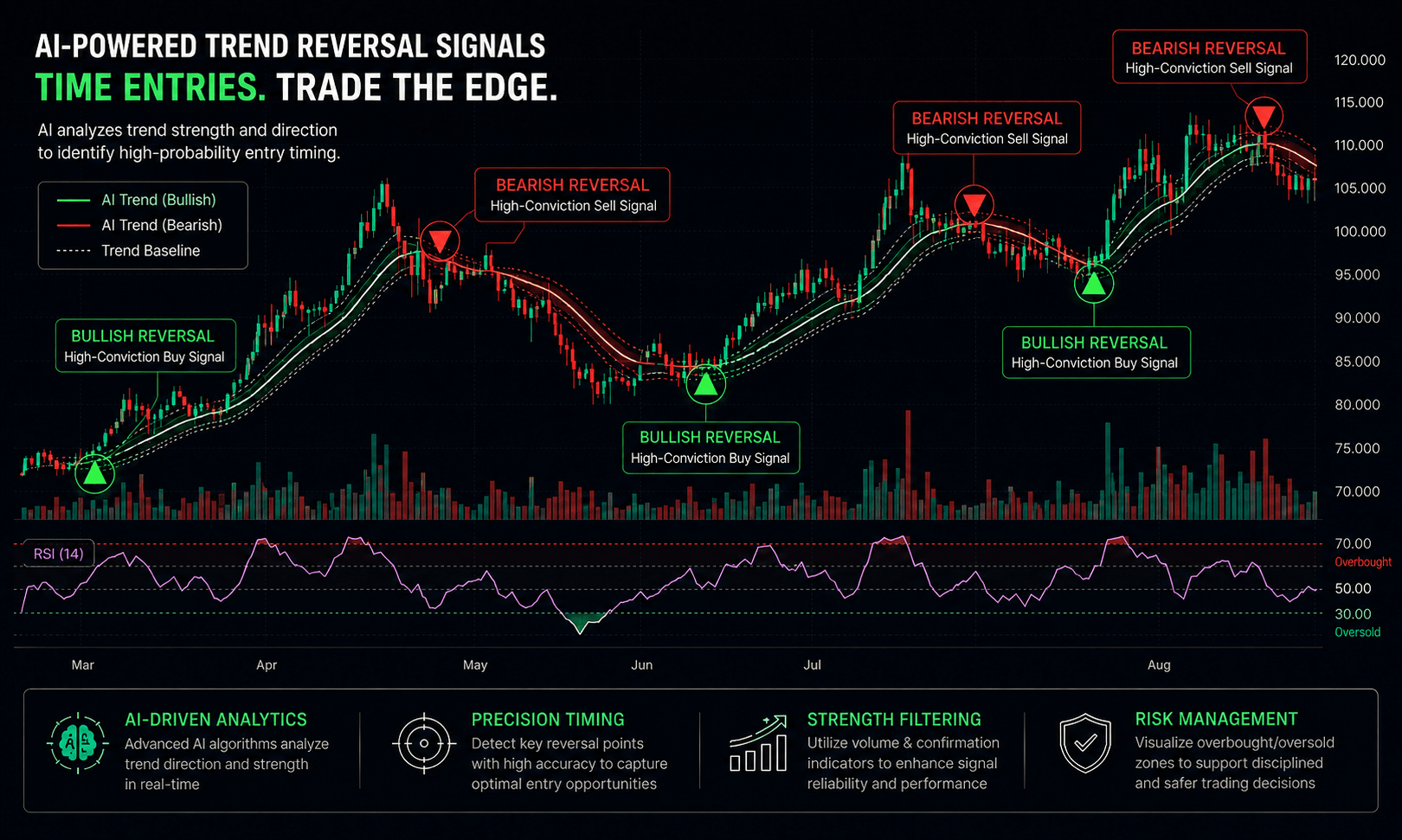
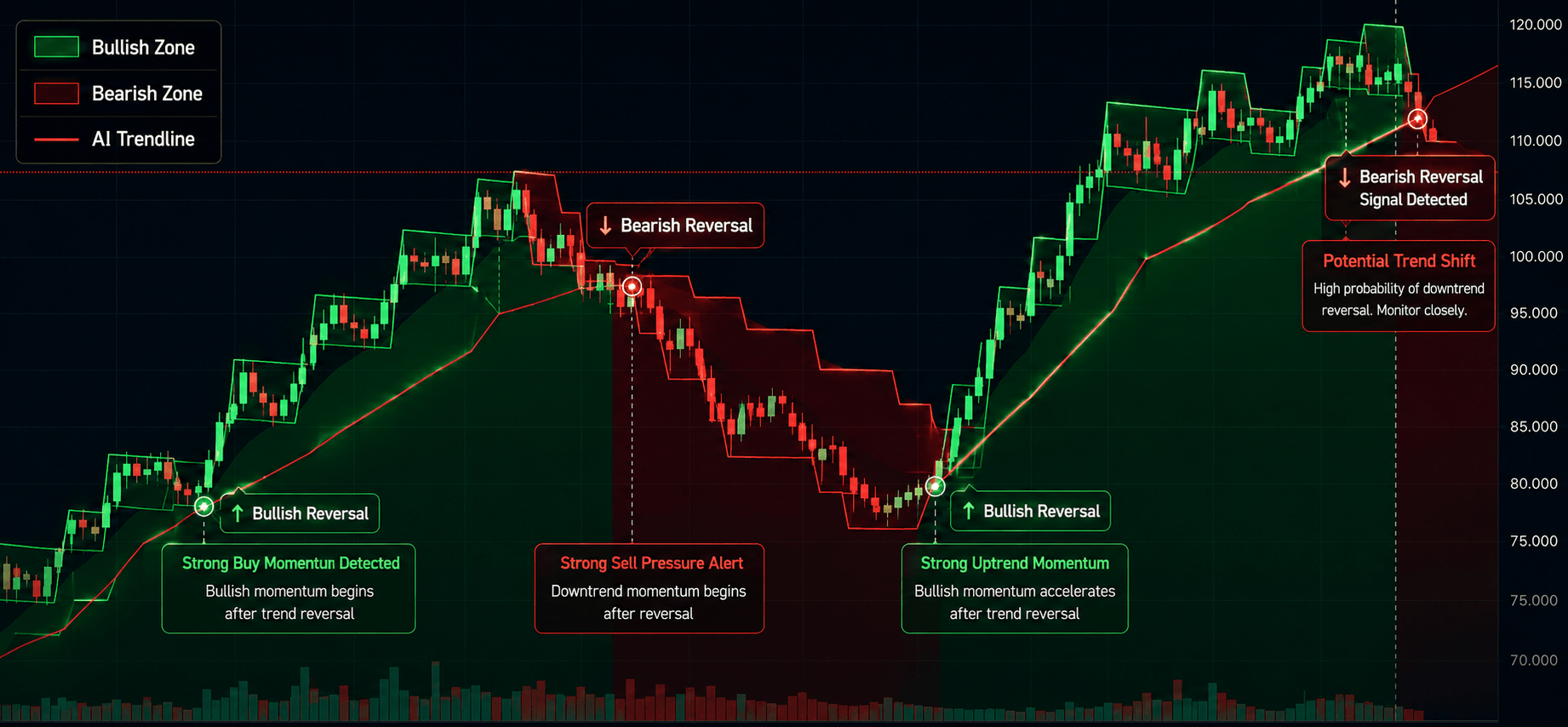
Bull Wave / Bear Wave Forecast Model
Engineered to help you read market direction and momentum faster than the crowd.
- Instantly separate bullish momentum from bearish pressure
- Pinpoint high-probability entry zones with confidence
- Chart signals clear enough for beginners, sharp enough for pros
Winning Pattern Detection
Instantly surfaces the high-probability setups that repeat across the charts — a trusted edge for timing your entries and exits.
- Spot momentum building in real time
- Catch trend-reversal points before they break
- Built for active traders who need results, not theory

AI Live Economic Dashboard
AI analyzes real-time market data — turning complex, global investment flows into clear insight in seconds.
- Track global stock markets in real time
- See exactly which assets are strong — and which are fading
- Watch how geopolitical events move the markets
About the Author