What Is Dividend Yield?
Dividend yield is a financial ratio that shows how much a company pays out in dividends each year relative to its stock price, expressed as a percentage. It is calculated by dividing the annual dividend per share by the current share price, giving investors a quick measure of the income return they can expect from owning the stock.
Dividend yield moves inversely with stock price when the dividend amount stays fixed: if the stock price falls while the dividend remains unchanged, the yield rises, and vice versa. This means a suddenly high yield can reflect either an attractive opportunity or a falling stock price signaling trouble.
The Yield Trap
A “yield trap” occurs when a stock’s price has dropped sharply due to business problems, pushing the dividend yield to an artificially high, tempting level just before the company cuts or eliminates the dividend altogether. Investors chasing high yields without checking sustainability can be caught off guard by this pattern.
What Is the Dividend Payout Ratio?
The dividend payout ratio measures the percentage of a company’s net income that is paid out to shareholders as dividends, calculated by dividing total dividends paid by net income. It indicates how sustainable the dividend is: a lower ratio suggests more room for the dividend to grow or be maintained during a downturn, while a very high ratio suggests the company is distributing nearly all its profits.
What a Payout Ratio Above 100% Means
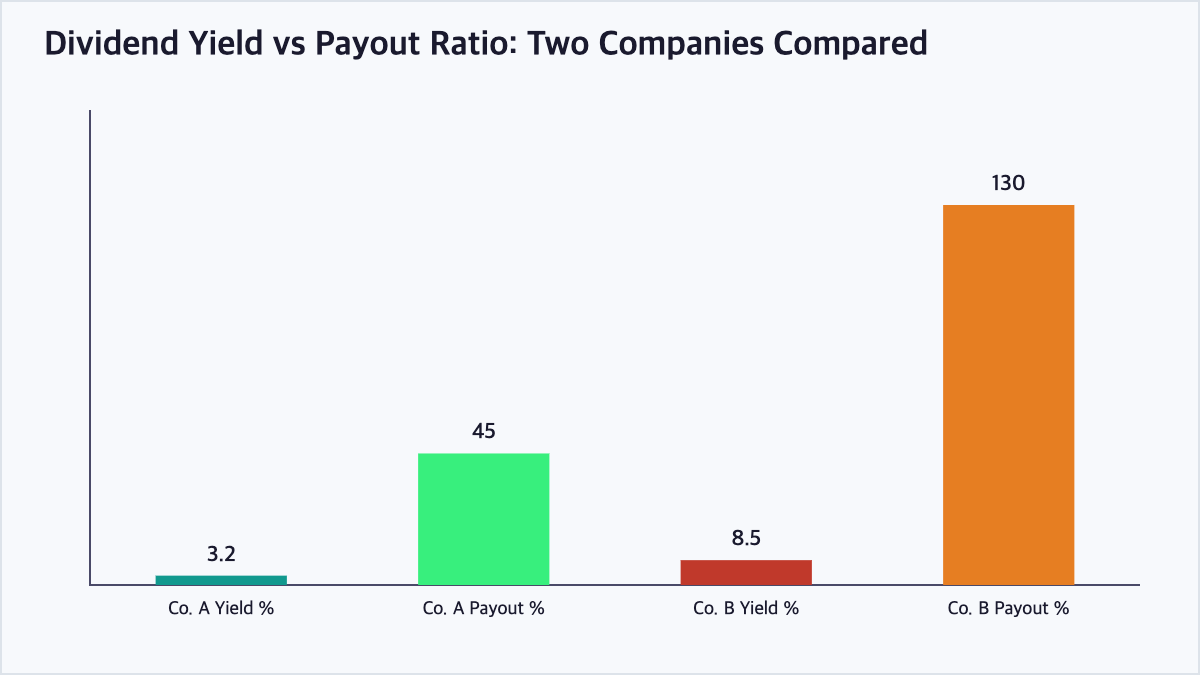
When the payout ratio exceeds 100%, the company is paying out more in dividends than it earns in net income, funding the difference from cash reserves, debt, or asset sales. This is generally unsustainable over the long term and often precedes a dividend cut unless earnings recover quickly.
Dividend Yield vs Payout Ratio: Key Differences
| Metric | Dividend Yield | Dividend Payout Ratio |
|---|---|---|
| What It Measures | Income return relative to stock price | Share of earnings paid as dividends |
| Formula | Annual dividend ÷ share price | Total dividends ÷ net income |
| Ideal Range | Varies by sector | Generally 30%–60% for sustainability |
| Warning Sign | Unusually high yield vs peers | Ratio above 100% |
| Best Used For | Comparing income potential | Assessing dividend safety |
Frequently Asked Questions
Is a higher dividend yield always better?
Not necessarily. A very high yield relative to a company’s industry peers can signal that the market expects a dividend cut, so investors should check the payout ratio and underlying business fundamentals before assuming a high yield is a good deal.
What payout ratio is considered healthy?
A payout ratio in the range of roughly 30% to 60% is often viewed as sustainable for many industries, though capital-intensive sectors like REITs and utilities commonly operate with structurally higher payout ratios due to their business models.
Can a company have a low yield but a high payout ratio?
Yes. A company with modest earnings and a fixed dividend on a high stock price can show a low yield while still paying out a large share of its profits, illustrating why the two metrics should be evaluated together rather than in isolation.
How often do companies change their dividend payout?
Dividend changes vary by company and are typically reviewed quarterly or annually by the board of directors, based on earnings performance, cash flow needs, and broader capital allocation priorities such as growth investment or debt reduction.
Key Takeaways
Dividend yield shows the income return relative to price, while the payout ratio reveals how sustainable that dividend actually is. Evaluating both together helps investors avoid yield traps and identify dependable, long-term dividend payers. This article is for informational purposes only and does not constitute investment advice.

QuantPro: AI Finds the Trade Before You Do
From AI-powered chart analysis to real-time market intelligence — everything a serious investor needs, in one platform.
- Automated AI chart analysis with precision trend timing
- Bull Radar: real-time visualization of geopolitical & economic shifts
- Live market-moving news and insights, curated for you
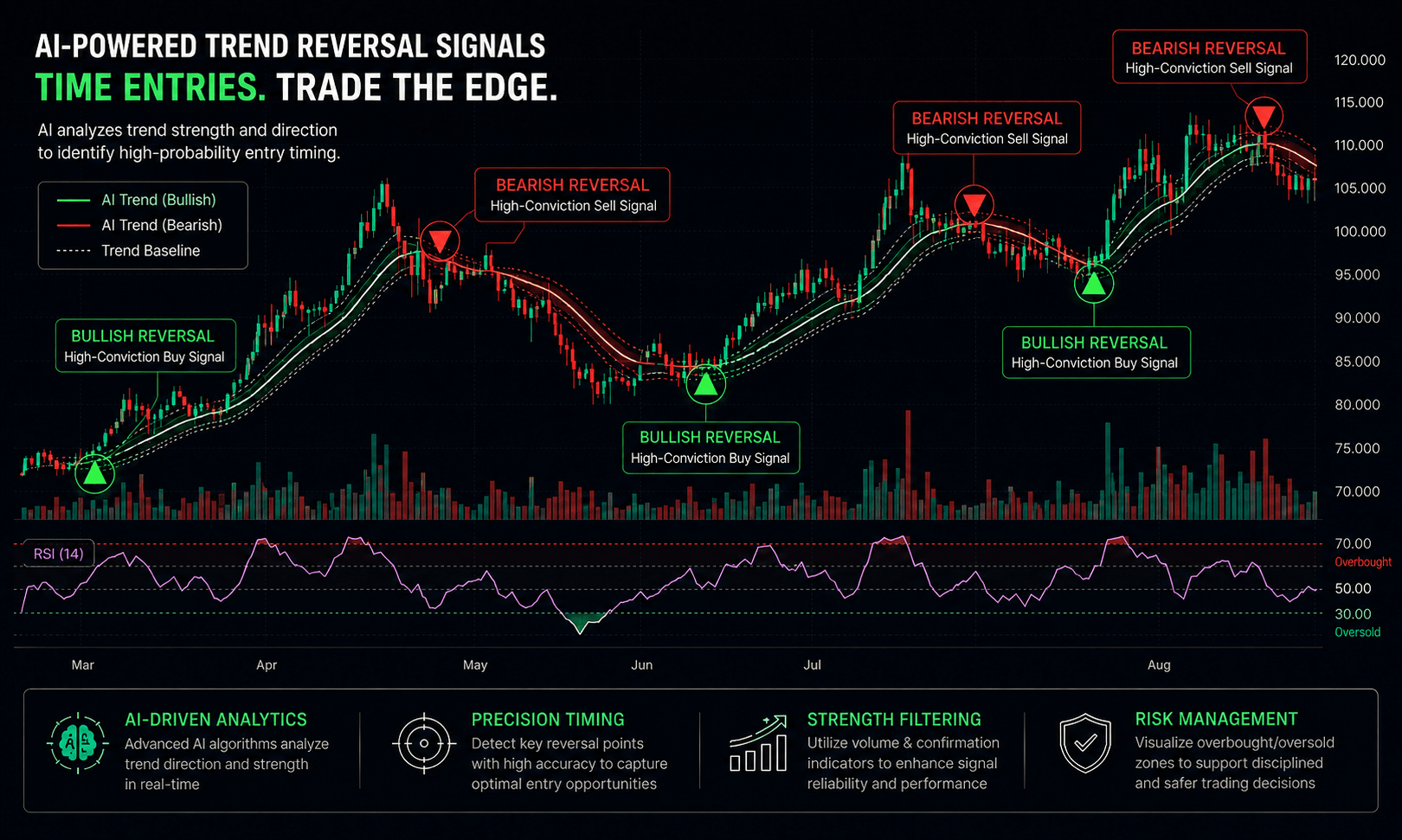
Bull Wave / Bear Wave Forecast Model
Engineered to help you read market direction and momentum faster than the crowd.
- Instantly separate bullish momentum from bearish pressure
- Pinpoint high-probability entry zones with confidence
- Chart signals clear enough for beginners, sharp enough for pros
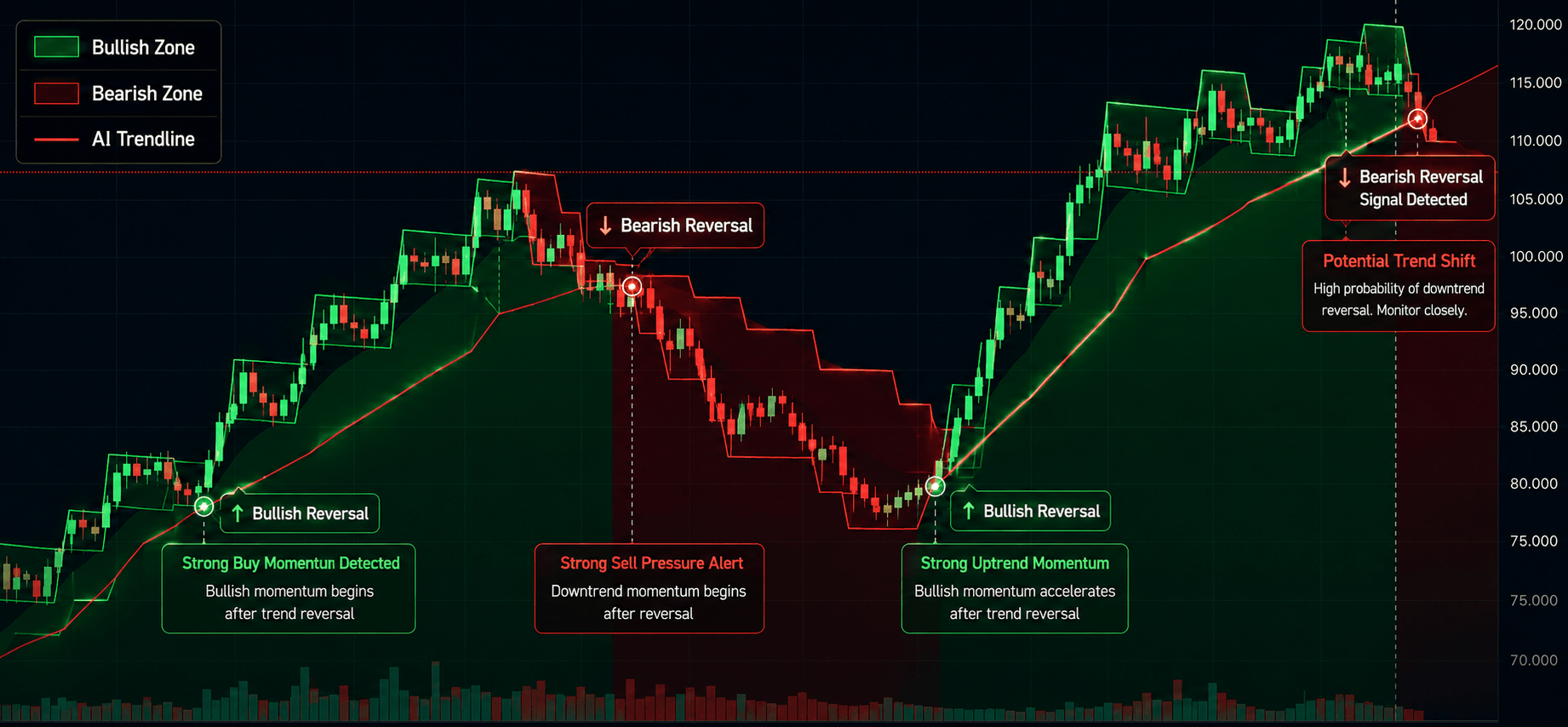
Winning Pattern Detection
Instantly surfaces the high-probability setups that repeat across the charts — a trusted edge for timing your entries and exits.
- Spot momentum building in real time
- Catch trend-reversal points before they break
- Built for active traders who need results, not theory

AI Live Economic Dashboard
AI analyzes real-time market data — turning complex, global investment flows into clear insight in seconds.
- Track global stock markets in real time
- See exactly which assets are strong — and which are fading
- Watch how geopolitical events move the markets
About the Author