What Is Dollar-Cost Averaging?
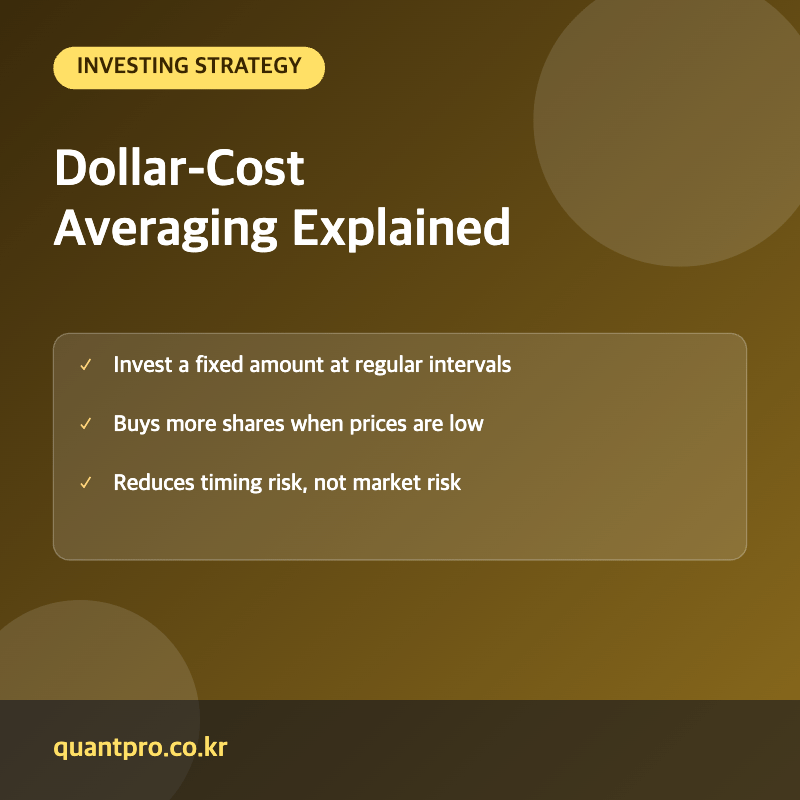
Dollar-cost averaging (DCA) is an investment strategy where an investor divides a total sum of money into fixed, regular purchases made over time, rather than investing the entire amount at once. This approach means the investor automatically buys more shares when prices are low and fewer shares when prices are high, which can lower the average cost per share over the investment period.
DCA is commonly used with recurring contributions such as monthly retirement account deposits or scheduled purchases of index funds, and it is popular precisely because it removes the need to predict short-term market movements.
Why Investors Use Dollar-Cost Averaging
DCA reduces the psychological and practical difficulty of trying to time the market, since it removes the pressure of deciding exactly when to invest a lump sum. It also spreads purchases across different price points, which can smooth out the impact of short-term volatility on the investor’s overall entry price.
Dollar-Cost Averaging vs. Lump-Sum Investing
Historical studies generally show that investing a lump sum immediately tends to outperform DCA over long time horizons in markets that trend upward over time, simply because more money is invested in the market for longer. However, DCA can reduce regret risk and emotional stress, particularly for investors uncomfortable committing a large sum right before a potential downturn.
| Strategy | Market Timing Risk | Best Suited For |
|---|---|---|
| Dollar-Cost Averaging | Lower — spreads entry points over time | Investors prioritizing consistency and reduced regret risk |
| Lump-Sum Investing | Higher — full exposure at one entry point | Investors comfortable with full market exposure immediately |
| Value Averaging | Moderate — adjusts contributions based on performance | More hands-on investors willing to actively manage contributions |
Frequently Asked Questions
Does dollar-cost averaging guarantee better returns?
No, DCA does not guarantee higher returns and can actually underperform lump-sum investing in consistently rising markets, since it leaves some capital uninvested and out of the market for a period of time.
Is dollar-cost averaging only for retirement accounts?
While DCA is commonly associated with automatic retirement contributions, it can be applied to any type of investment account, including taxable brokerage accounts, whenever an investor chooses to invest in regular fixed installments.
Does dollar-cost averaging eliminate investment risk?
No, DCA reduces the risk of poor timing on a single large purchase, but it does not eliminate overall market risk — an investment can still lose value over the DCA period if the underlying asset declines persistently.
When might dollar-cost averaging be a better choice than a lump sum?
DCA can be particularly useful for investors who are emotionally uncomfortable with lump-sum investing, or in periods of high market uncertainty, since it reduces the risk of investing a large sum right before a sharp downturn.
Key Takeaways
Dollar-cost averaging spreads investment purchases over regular intervals to reduce the impact of market timing, offering psychological benefits and reduced regret risk even though lump-sum investing has historically outperformed it in rising markets over long periods. This article is for informational purposes only and does not constitute investment advice.

QuantPro: AI Finds the Trade Before You Do
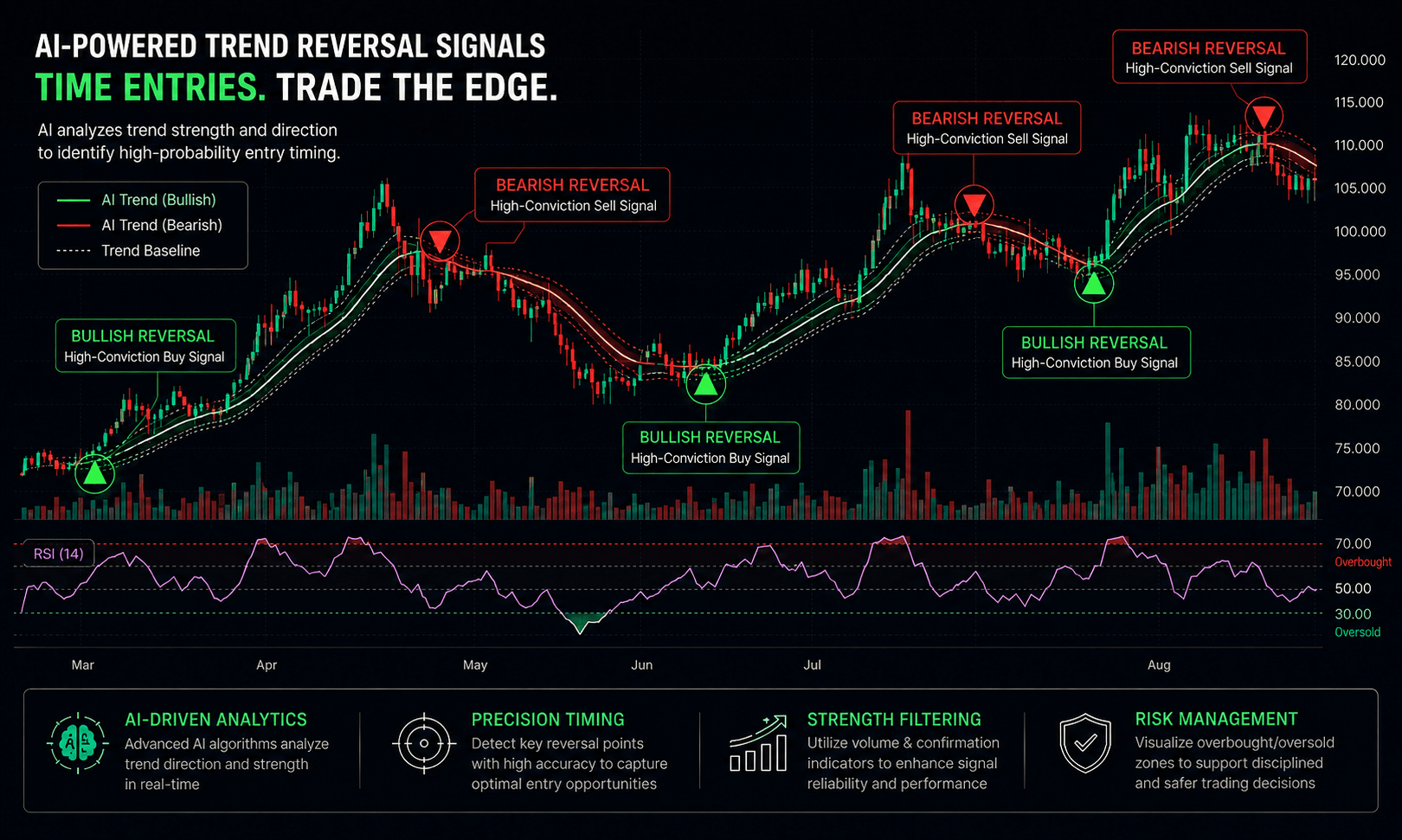
From AI-powered chart analysis to real-time market intelligence — everything a serious investor needs, in one platform.
- Automated AI chart analysis with precision trend timing
- Bull Radar: real-time visualization of geopolitical & economic shifts
- Live market-moving news and insights, curated for you
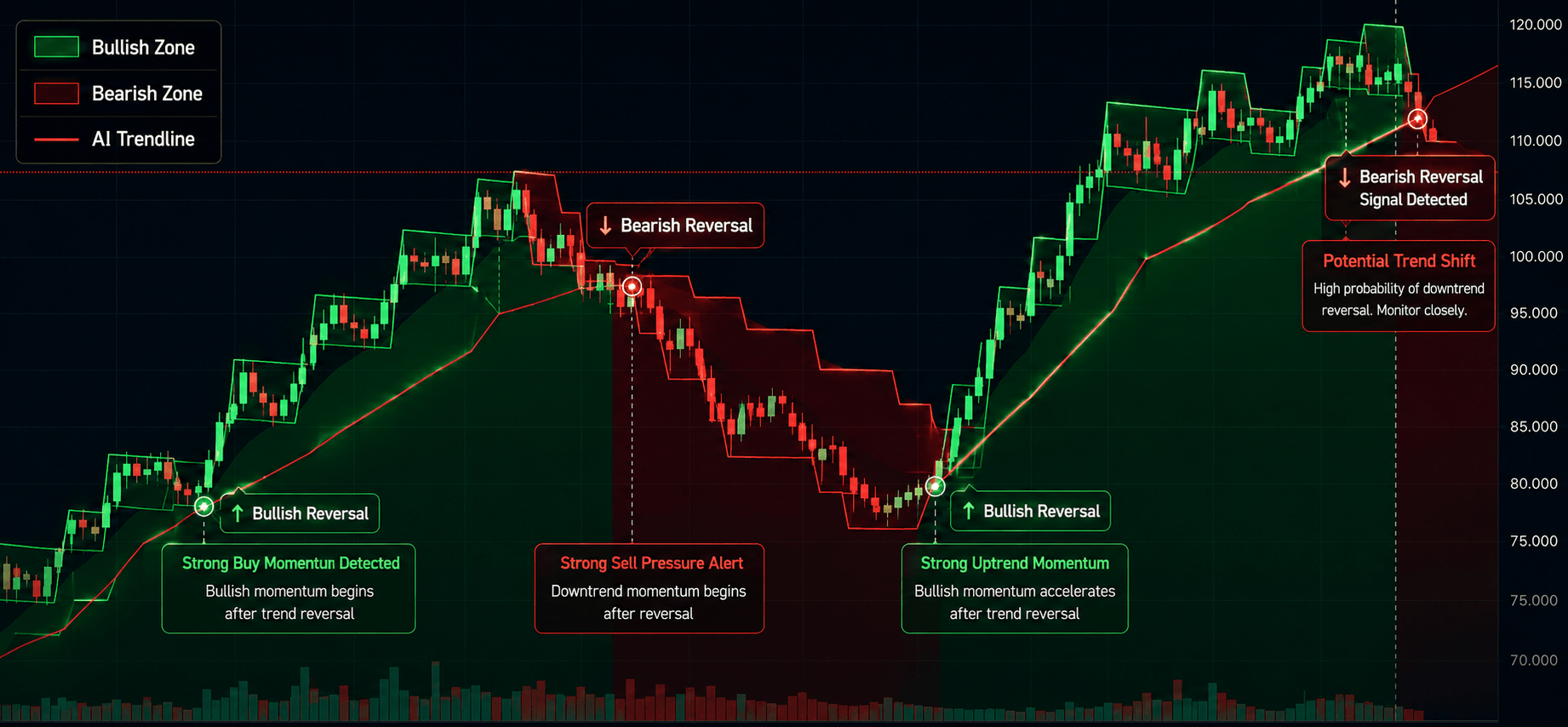
Bull Wave / Bear Wave Forecast Model
Engineered to help you read market direction and momentum faster than the crowd.
- Instantly separate bullish momentum from bearish pressure
- Pinpoint high-probability entry zones with confidence
- Chart signals clear enough for beginners, sharp enough for pros
Winning Pattern Detection
Instantly surfaces the high-probability setups that repeat across the charts — a trusted edge for timing your entries and exits.
- Spot momentum building in real time
- Catch trend-reversal points before they break
- Built for active traders who need results, not theory
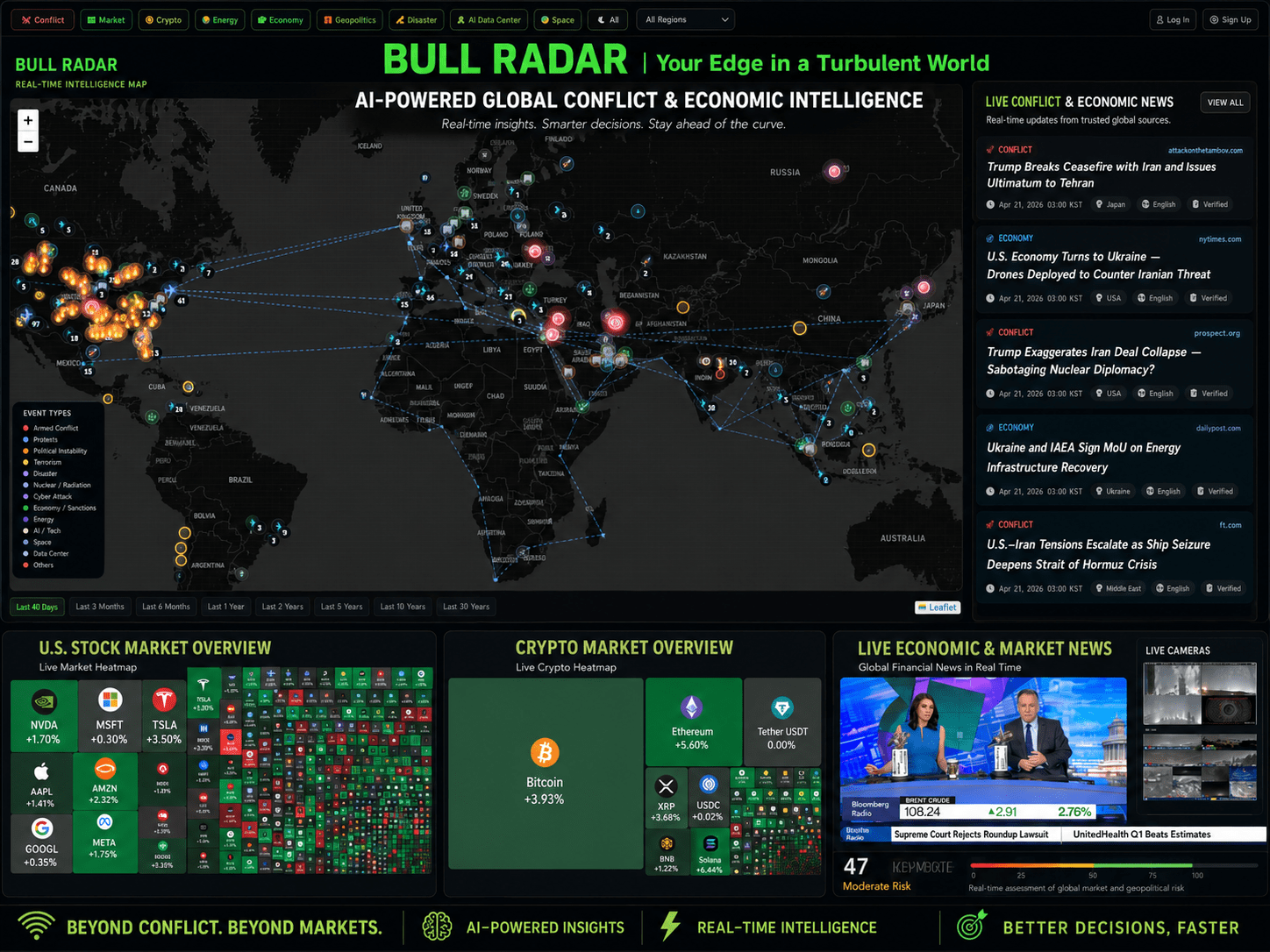
AI Live Economic Dashboard
AI analyzes real-time market data — turning complex, global investment flows into clear insight in seconds.
- Track global stock markets in real time
- See exactly which assets are strong — and which are fading
- Watch how geopolitical events move the markets
About the Author