What Is the Interest Coverage Ratio?
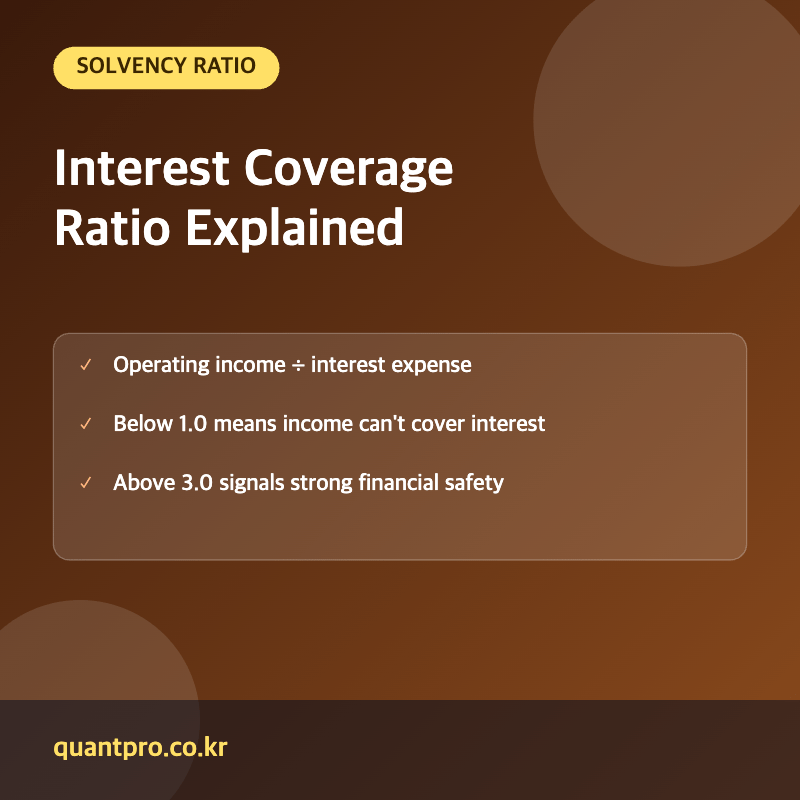
The interest coverage ratio measures how comfortably a company can pay the interest on its outstanding debt using its operating income. The formula is Operating Income ÷ Interest Expense, and a higher ratio indicates a company has ample earnings to cover its interest obligations with room to spare.
For example, an interest coverage ratio of 3.0 means operating income is three times the interest expense, leaving a substantial cushion after interest payments. A ratio below 1.0 means operating income alone cannot cover interest costs — companies in this position are sometimes referred to as “zombie companies.”
Why a Low Ratio Is Risky
When the interest coverage ratio stays below 1.0 for an extended period, a company must find other sources of funds — additional borrowing or asset sales — to meet its interest obligations, which can further weaken its financial position. Rising interest rate environments are particularly dangerous, as they can push borrowing costs up and cause the ratio to deteriorate quickly.
Interpreting Interest Coverage Ratio Ranges
Investors and credit rating agencies commonly use benchmark ranges to assess financial risk based on the interest coverage ratio, as summarized in the table below.
| Interest Coverage Ratio | Financial Health Assessment | Investor Implication |
|---|---|---|
| Below 1.0 | Cannot cover interest with operating income | Warning sign, requires close attention |
| 1.0–3.0 | Can pay interest but with limited cushion | Vulnerable to rate increases |
| Above 3.0 | Ample earnings relative to interest burden | Generally considered financially stable |
Industry Differences in Interest Coverage
Capital-intensive industries with heavy debt loads, such as shipbuilding, steel, and construction, tend to show lower interest coverage ratios, while asset-light sectors like technology and services typically maintain much higher ratios. Comparing a company’s ratio to its industry peers gives the most meaningful read.
Frequently Asked Questions
Does an interest coverage ratio below 1.0 mean bankruptcy is imminent?
Not necessarily, but a ratio sustained below 1.0 over multiple periods is a warning sign of weak financial structure that warrants further review of the company’s debt repayment capacity.
Where can I find the data to calculate this ratio?
The operating income and interest expense figures needed are disclosed on a company’s income statement, and the ratio is also commonly reported by financial data providers and research platforms.
Is a higher interest coverage ratio always better?
Generally yes, since it signals stability, but an extremely high ratio might also suggest a company is underutilizing debt leverage to fund growth, so it should be weighed alongside growth and capital efficiency metrics.
How does interest coverage ratio differ from the debt-to-equity ratio?
The debt-to-equity ratio shows how much debt a company carries relative to equity, while the interest coverage ratio shows whether current earnings can actually service that debt — the two provide complementary views of financial health.
Key Takeaways
The interest coverage ratio shows how comfortably a company’s operating income can cover its interest expense, with a ratio above 3.0 generally viewed as stable and below 1.0 signaling financial risk. This article is for informational purposes only and does not constitute investment advice.

QuantPro: AI Finds the Trade Before You Do
From AI-powered chart analysis to real-time market intelligence — everything a serious investor needs, in one platform.
- Automated AI chart analysis with precision trend timing
- Bull Radar: real-time visualization of geopolitical & economic shifts
- Live market-moving news and insights, curated for you
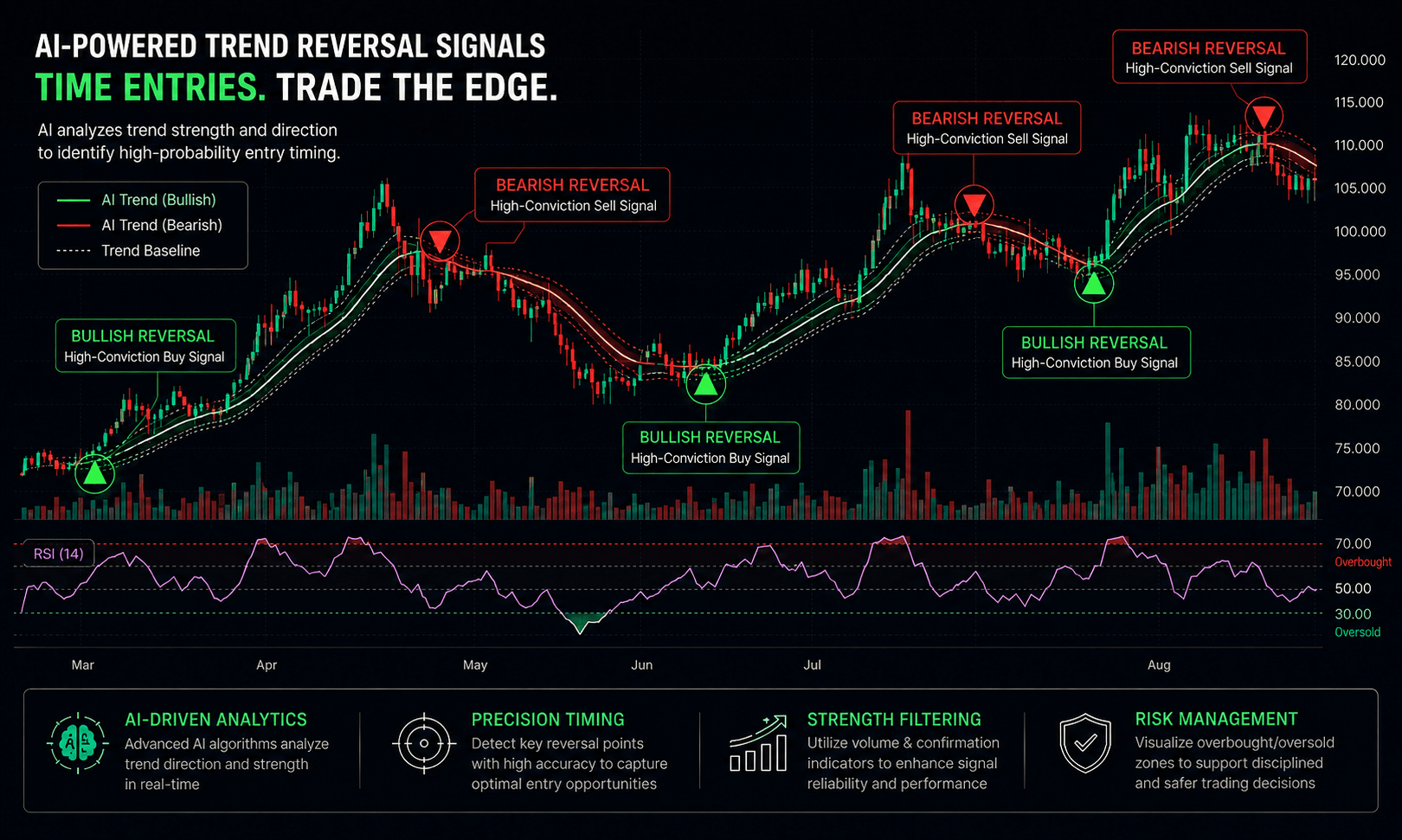
Bull Wave / Bear Wave Forecast Model
Engineered to help you read market direction and momentum faster than the crowd.
- Instantly separate bullish momentum from bearish pressure
- Pinpoint high-probability entry zones with confidence
- Chart signals clear enough for beginners, sharp enough for pros
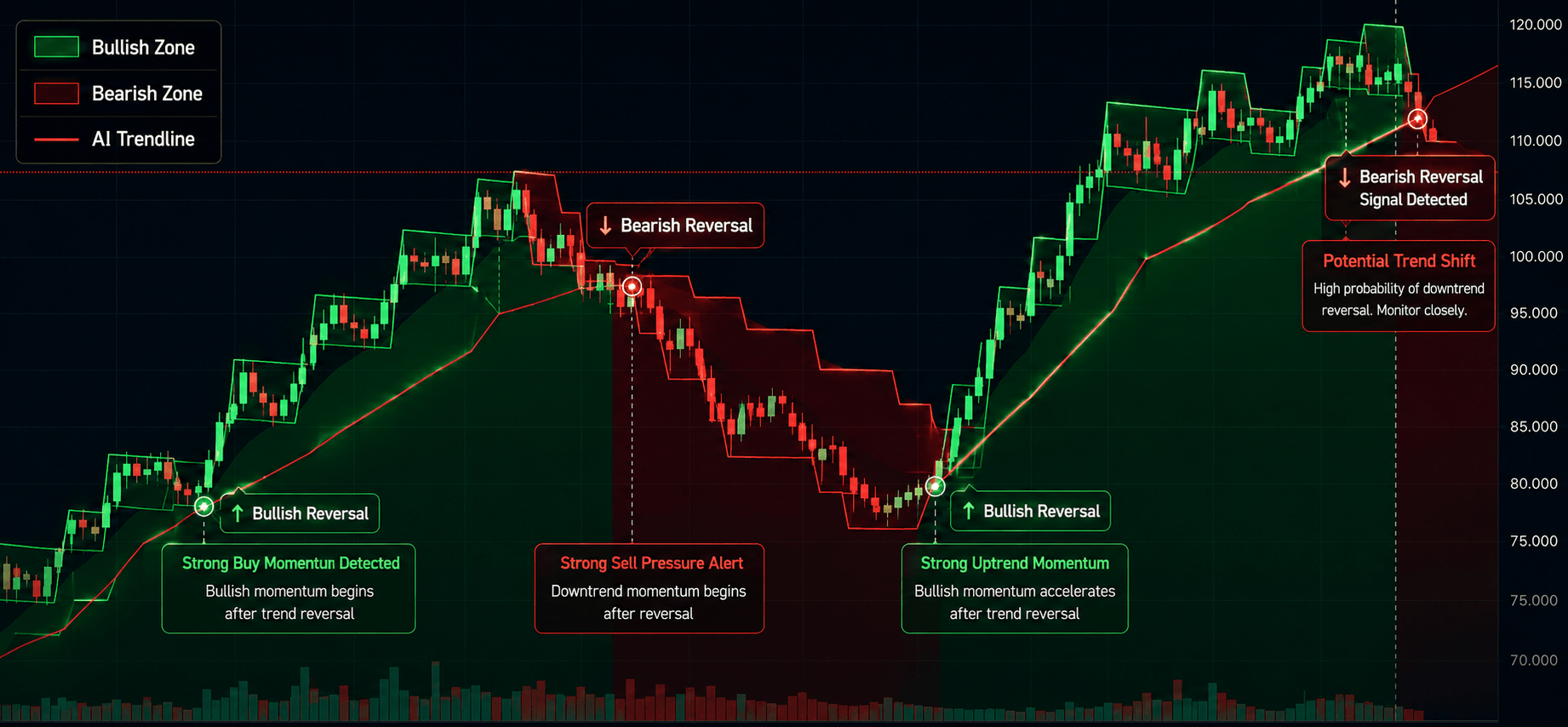
Winning Pattern Detection
Instantly surfaces the high-probability setups that repeat across the charts — a trusted edge for timing your entries and exits.
- Spot momentum building in real time
- Catch trend-reversal points before they break
- Built for active traders who need results, not theory

AI Live Economic Dashboard
AI analyzes real-time market data — turning complex, global investment flows into clear insight in seconds.
- Track global stock markets in real time
- See exactly which assets are strong — and which are fading
- Watch how geopolitical events move the markets
About the Author