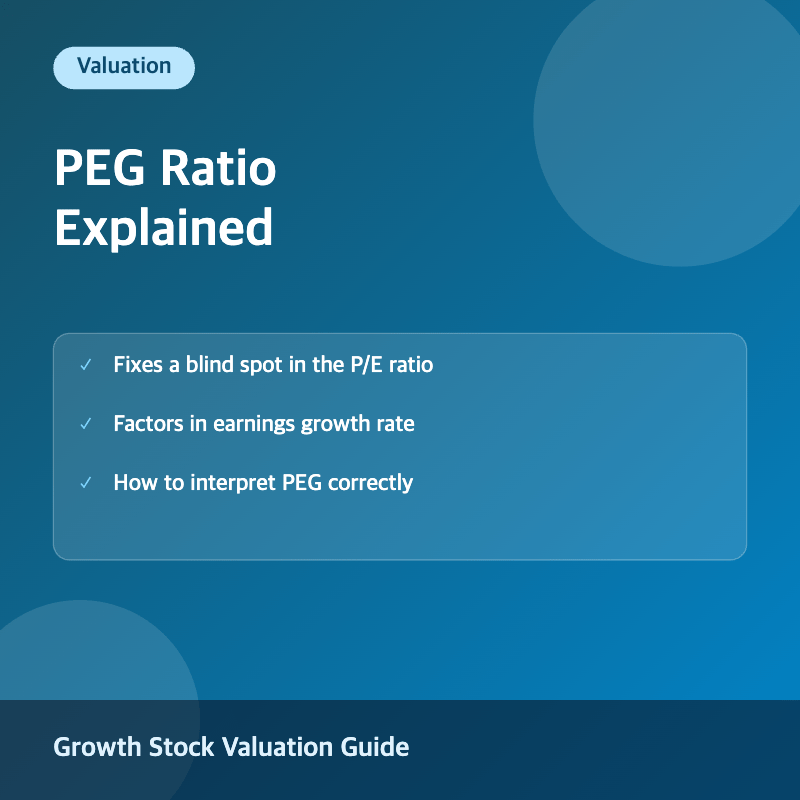
What Is the PEG Ratio?
The PEG ratio (Price/Earnings to Growth Ratio) divides a company’s price-to-earnings (P/E) ratio by its expected earnings growth rate, providing a valuation measure that accounts for growth rather than looking at current earnings in isolation. A lower PEG ratio generally suggests a stock may be undervalued relative to its growth prospects.
How to Calculate the PEG Ratio
The formula is: PEG Ratio = P/E Ratio ÷ (Annual EPS Growth Rate × 100). For example, a company with a P/E of 20 and an expected annual earnings growth rate of 20% over the next few years would have a PEG of 1.0 (20 ÷ 20), a level commonly viewed as fairly valued relative to growth.
Why P/E Alone Isn’t Enough
A company with a P/E of 30 growing earnings at 30% annually may actually be more attractively valued than one with a P/E of 15 growing at only 5% annually, since the PEG ratios reveal the first company at 1.0 versus the second at 3.0 — the opposite conclusion from looking at P/E alone.
PEG Ratio Interpretation Guide
| PEG Ratio | General Interpretation | Investor Takeaway |
|---|---|---|
| Below 1.0 | Potentially undervalued relative to growth | Attractive investment candidate |
| 1.0 | Fairly valued | Growth and valuation are balanced |
| 1.0 to 2.0 | Somewhat overvalued relative to growth | Requires further analysis |
| Above 2.0 | Significantly overvalued relative to growth | Warrants careful scrutiny |
Limitations to Keep in Mind
Growth Estimates Carry Uncertainty
The PEG ratio relies on projected future earnings growth, which varies by analyst and may never materialize as forecast, meaning the reliability of a PEG figure is only as good as the growth estimate underlying it — checking the assumptions and track record behind the forecast matters.
Not Ideal for Every Sector
PEG works best for growth-oriented companies with meaningful earnings expansion, but is less useful for mature, low-growth value stocks or dividend-focused defensive sectors where growth rates are naturally modest and less central to the investment thesis.
Using PEG Alongside Other Metrics
Combining PEG with P/E and P/B
PEG works best as part of a broader analysis alongside P/E, price-to-book (P/B), and return on equity (ROE), giving a more balanced view of both a company’s financial health and its valuation relative to growth.
Comparing Within the Same Industry
PEG ratios are most meaningful when compared across companies in the same industry rather than against an absolute universal benchmark, since growth expectations and typical valuation levels vary significantly by sector.
Frequently Asked Questions
Does a low PEG ratio always mean a good investment?
Not necessarily. A low PEG may signal undervaluation relative to growth, but investors should also consider the reliability of growth estimates, the company’s financial health, and industry conditions before concluding it’s a good investment.
Can PEG be calculated for unprofitable companies?
No. Since PEG is based on the P/E ratio, it cannot be meaningfully calculated for companies with negative earnings, as P/E itself becomes undefined or misleading in that case. Sales-based metrics are typically used instead.
Where can I find a stock’s PEG ratio?
Most financial data platforms and brokerage services display PEG ratios directly, or you can calculate it yourself using the current P/E ratio and analyst consensus estimates for forward earnings growth.
Is a PEG of exactly 1.0 always fair value?
A PEG of 1.0 is a commonly used reference point rather than an absolute rule — appropriate PEG levels can shift with market conditions, interest rates, and sector-specific growth expectations.
Key Takeaways
The PEG ratio improves on the standard P/E ratio by incorporating expected earnings growth, making it especially useful for evaluating growth stocks where growth rates differ substantially from peer companies. Because it depends on growth estimates that may not materialize, PEG should be used alongside other financial metrics rather than in isolation. This article is for informational purposes only and does not constitute investment advice.

QuantPro: AI Finds the Trade Before You Do
From AI-powered chart analysis to real-time market intelligence — everything a serious investor needs, in one platform.
- Automated AI chart analysis with precision trend timing
- Bull Radar: real-time visualization of geopolitical & economic shifts
- Live market-moving news and insights, curated for you
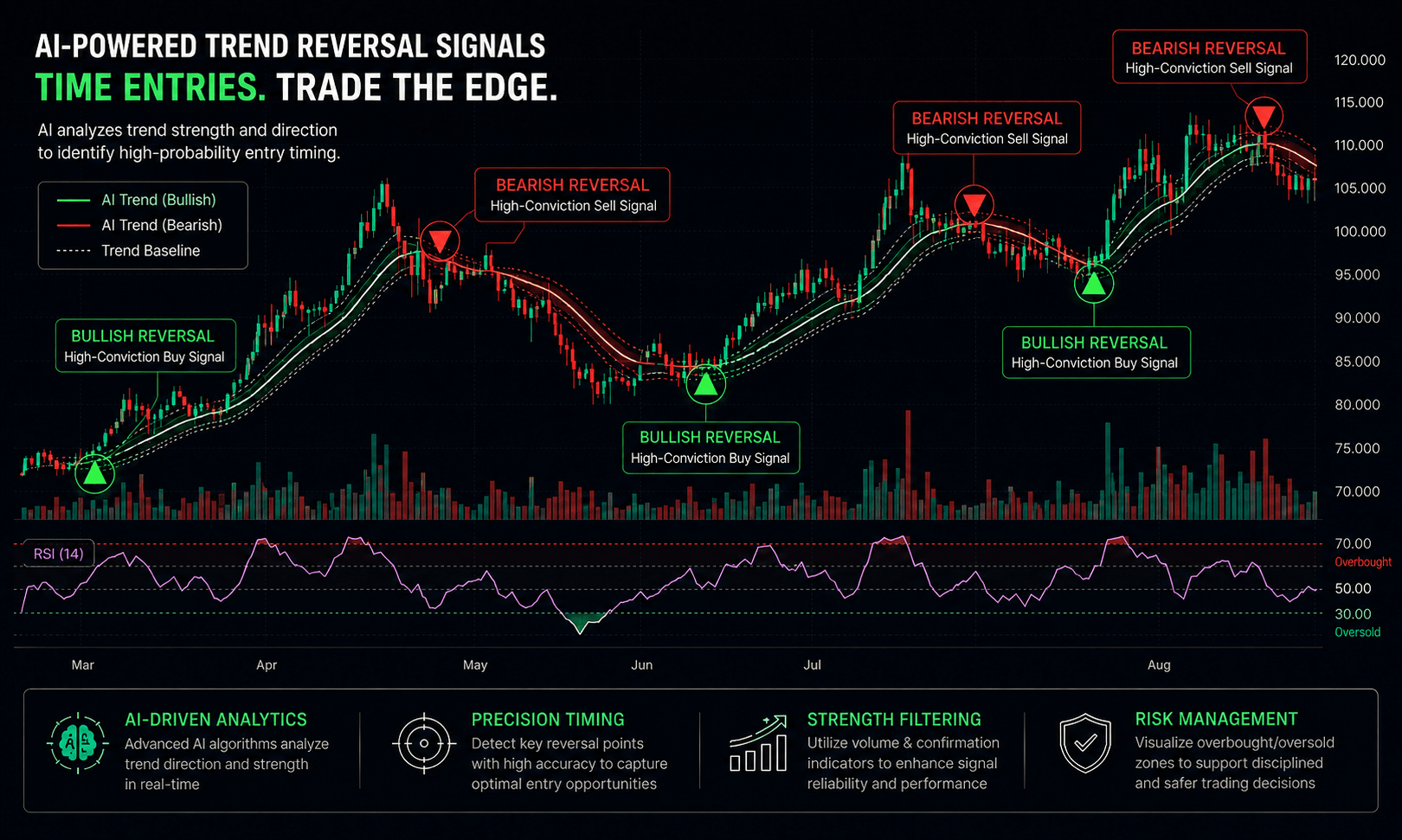
Bull Wave / Bear Wave Forecast Model
Engineered to help you read market direction and momentum faster than the crowd.
- Instantly separate bullish momentum from bearish pressure
- Pinpoint high-probability entry zones with confidence
- Chart signals clear enough for beginners, sharp enough for pros
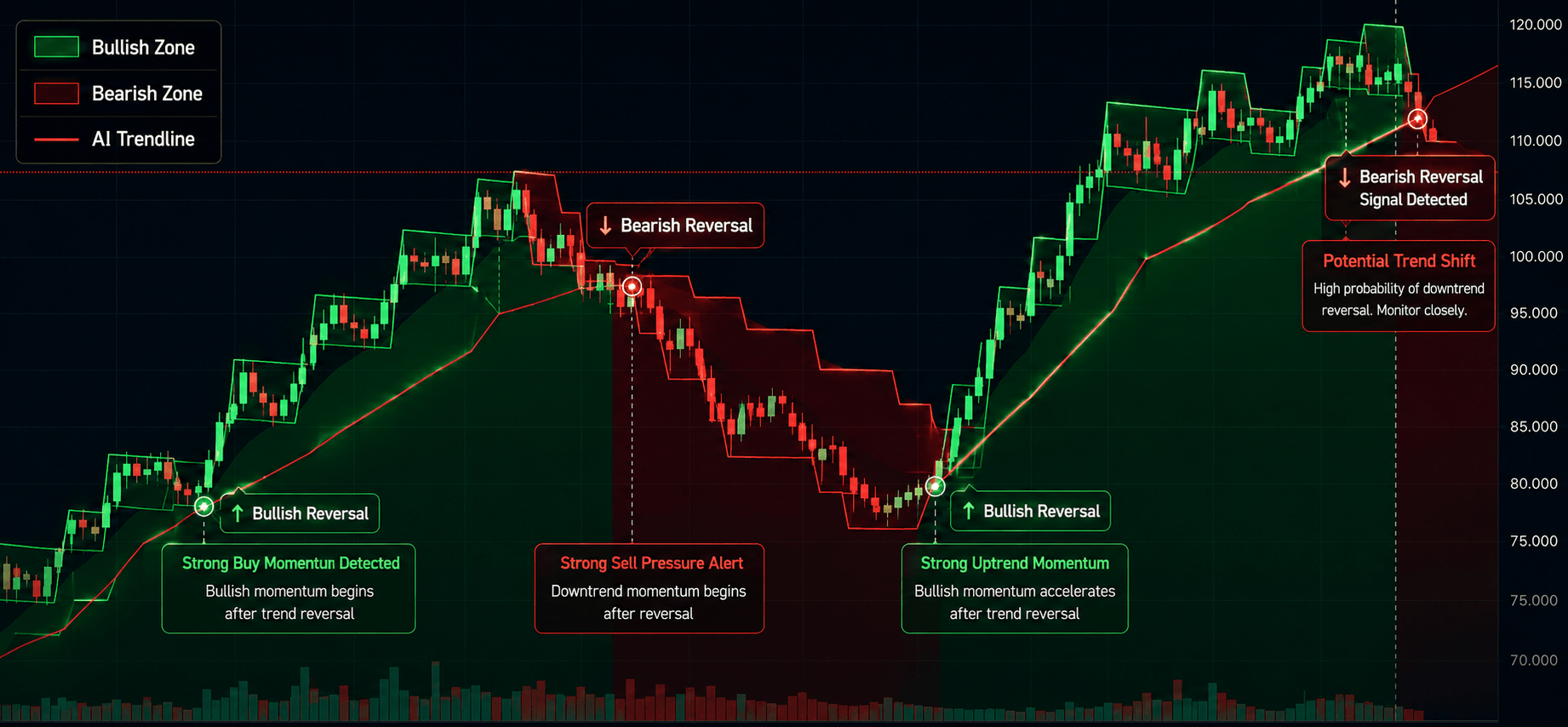
Winning Pattern Detection
Instantly surfaces the high-probability setups that repeat across the charts — a trusted edge for timing your entries and exits.
- Spot momentum building in real time
- Catch trend-reversal points before they break
- Built for active traders who need results, not theory

AI Live Economic Dashboard
AI analyzes real-time market data — turning complex, global investment flows into clear insight in seconds.
- Track global stock markets in real time
- See exactly which assets are strong — and which are fading
- Watch how geopolitical events move the markets
About the Author