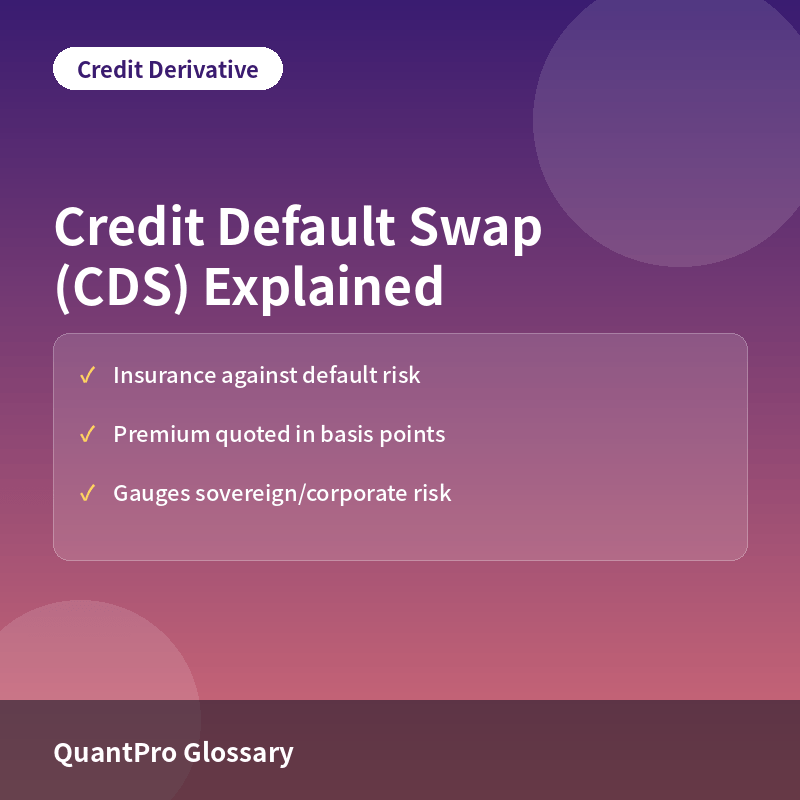
What Is a Credit Default Swap (CDS)?
A Credit Default Swap (CDS) is a derivative contract that lets a bondholder insure against the issuer defaulting. The protection buyer pays a periodic premium, and if the underlying borrower defaults, the protection seller compensates the buyer for the resulting loss — functioning much like an insurance policy on credit risk.
How CDS Premiums Are Priced
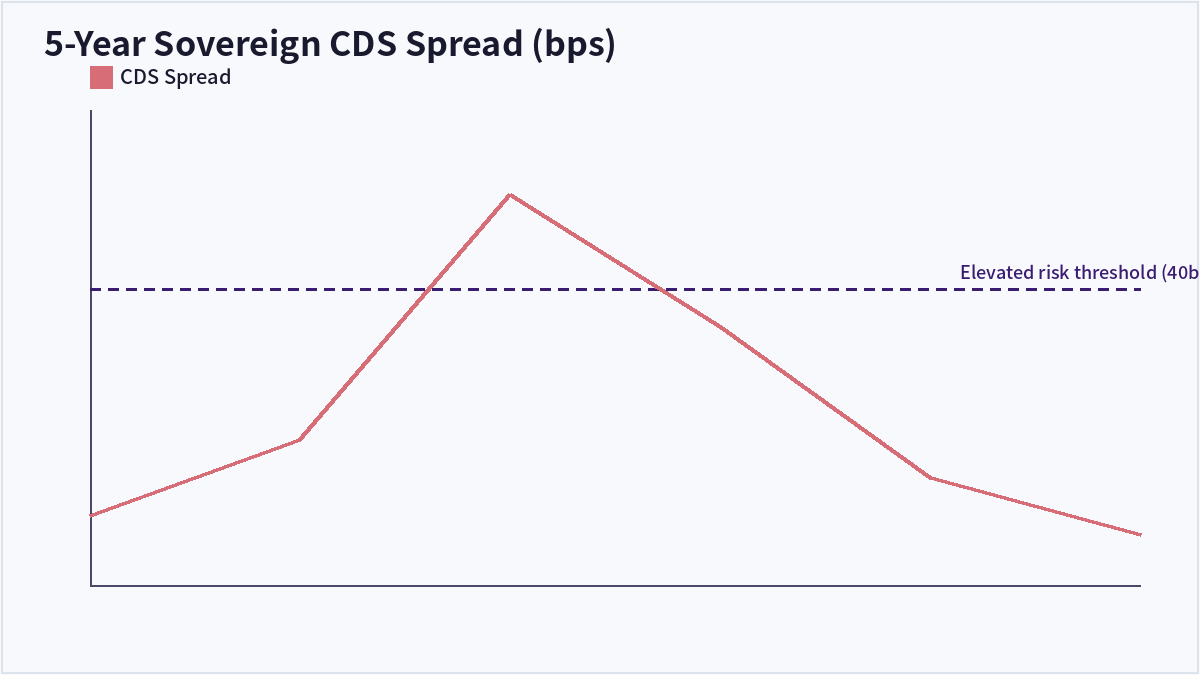
CDS premiums are quoted in basis points (bps), and they rise as the market perceives a higher probability of default. A 5-year sovereign CDS spread of 30bp means a buyer pays roughly $30,000 annually to insure $10M in bonds against default.
CDS Spreads vs Credit Ratings
Lower credit ratings are generally associated with wider CDS spreads, since rating agencies assign higher default probabilities to weaker credits. But rating changes tend to lag market sentiment, so CDS spreads are often watched as a real-time, forward-looking signal that can move well before an official rating action.
Using CDS to Gauge Sovereign Risk
A sharp rise in a country’s sovereign CDS spread signals that markets are growing more concerned about its fiscal health or external repayment capacity. If a spread that normally trades around 27bp jumps to 45bp, it suggests investors are pricing in a meaningfully higher probability of default than before.
CDS Spreads and Bond Yield Spreads
CDS spreads tend to move in the same direction as the yield spread between a country’s bonds and safe-haven benchmarks like U.S. Treasuries. When both widen together, it reinforces the signal that credit risk is being priced in from two independent angles, which analysts often use as a cross-check.
| Party | Role |
|---|---|
| Protection Buyer | Pays premium, receives payout on default |
| Protection Seller | Collects premium, owes payout on default |
| Premium Unit | Basis points (bps); 1bp = 0.01% |
Frequently Asked Questions
What does a rising CDS spread signal?
It signals the market is pricing in higher default risk for the underlying borrower — whether a sovereign or a corporation — and often coincides with wider credit spreads and reduced risk appetite.
Can retail investors trade CDS directly?
CDS contracts are traded over-the-counter mostly among institutional investors, so direct retail access is limited, though CDS spread levels are commonly followed as a public risk indicator.
Do CDS spreads move faster than credit ratings?
Generally yes — because CDS spreads are set by continuous market pricing, they often reflect shifts in perceived risk before formal rating agency actions catch up.
How were CDS connected to the 2008 financial crisis?
Excessive issuance of CDS tied to subprime mortgage securities, combined with protection sellers unable to cover losses when defaults spiked, was a major factor in how systemic risk spread through the financial system.
Key Takeaways
A Credit Default Swap lets bondholders insure against issuer default, and its premium reflects the market’s real-time assessment of default probability. CDS spreads are widely used as a forward-looking gauge of sovereign and corporate credit risk. This article is for informational purposes only and does not constitute investment advice.

QuantPro: AI Finds the Trade Before You Do
From AI-powered chart analysis to real-time market intelligence — everything a serious investor needs, in one platform.
- Automated AI chart analysis with precision trend timing
- Bull Radar: real-time visualization of geopolitical & economic shifts
- Live market-moving news and insights, curated for you
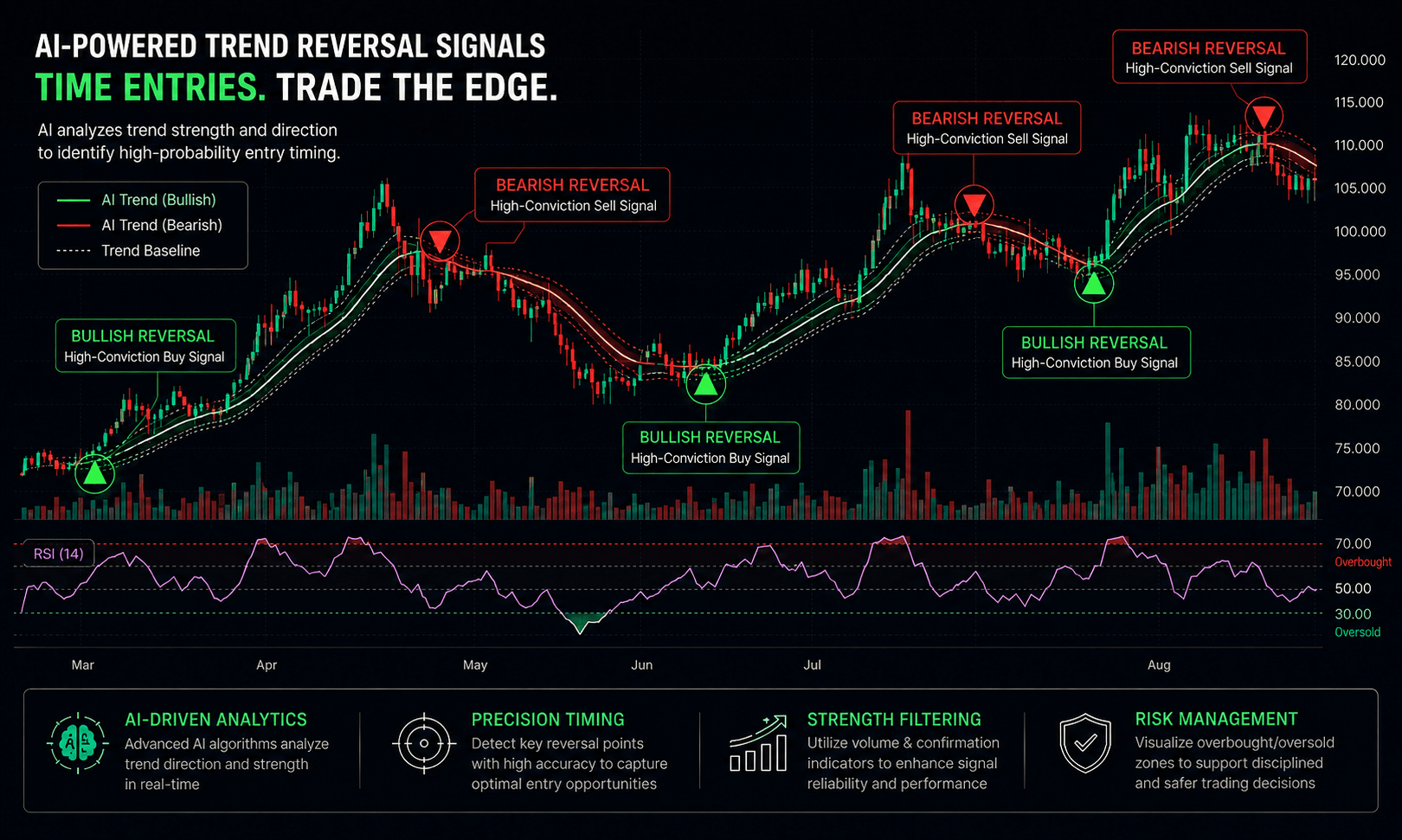
Bull Wave / Bear Wave Forecast Model
Engineered to help you read market direction and momentum faster than the crowd.
- Instantly separate bullish momentum from bearish pressure
- Pinpoint high-probability entry zones with confidence
- Chart signals clear enough for beginners, sharp enough for pros
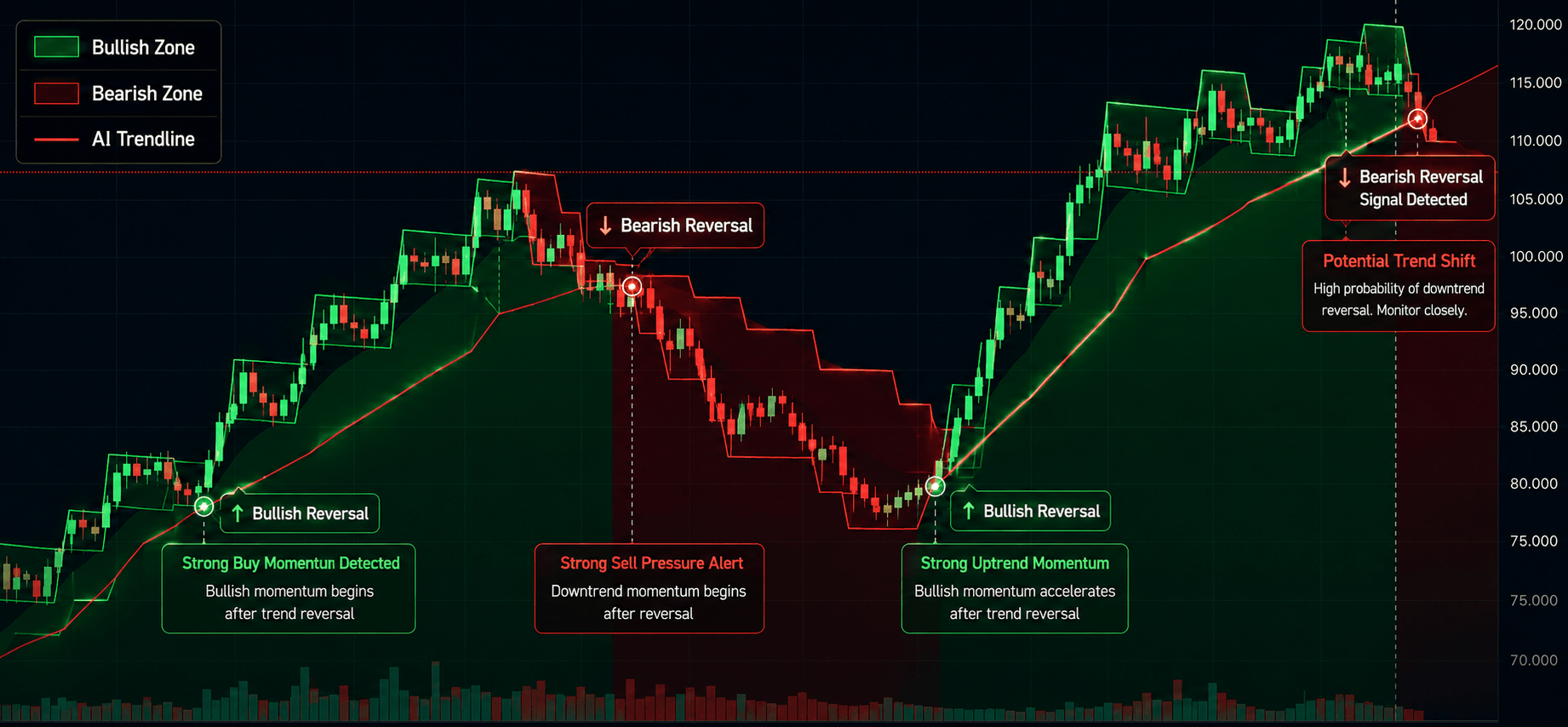
Winning Pattern Detection
Instantly surfaces the high-probability setups that repeat across the charts — a trusted edge for timing your entries and exits.
- Spot momentum building in real time
- Catch trend-reversal points before they break
- Built for active traders who need results, not theory
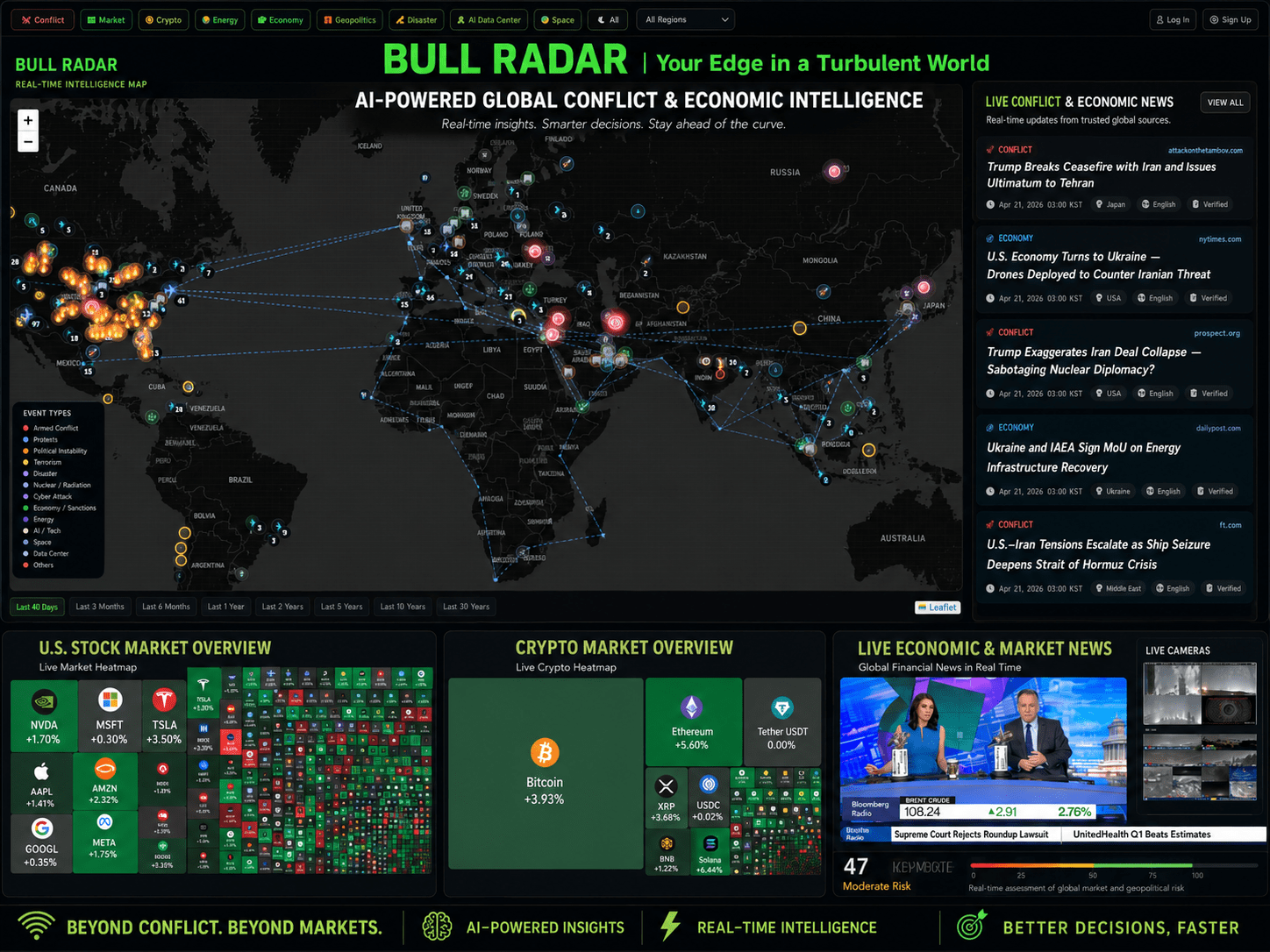
AI Live Economic Dashboard
AI analyzes real-time market data — turning complex, global investment flows into clear insight in seconds.
- Track global stock markets in real time
- See exactly which assets are strong — and which are fading
- Watch how geopolitical events move the markets
About the Author