What Is Net Profit Margin?
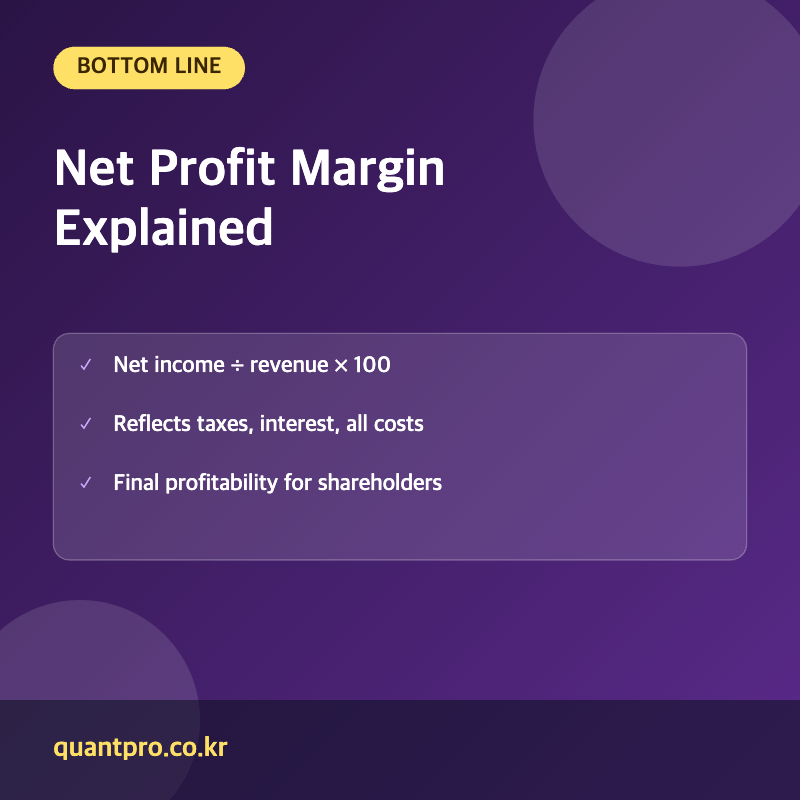
Net profit margin measures the percentage of revenue that remains as net income after all expenses — cost of goods sold, SG&A, interest, and taxes — have been deducted. The formula is Net Income ÷ Revenue × 100, and it represents the final share of sales that ultimately belongs to shareholders.
Because net profit margin captures non-operating items, financing costs, and tax effects in addition to core operations, it can be more volatile than operating margin, particularly around one-time gains, losses, or changes in tax rates.
Why Net Profit Margin Matters
Net profit margin directly ties to earnings per share (EPS), making it foundational to dividend capacity and valuation metrics like the price-to-earnings ratio (PER). A steadily improving net profit margin often signals broader gains in management efficiency.
What to Watch When Interpreting Net Profit Margin
One-time gains from asset sales or large impairment charges unrelated to core operations can significantly distort net income, so net profit margin should be reviewed alongside operating margin rather than in isolation for a clearer picture of sustainable profitability.
| Metric | Scope Covered | Volatility |
|---|---|---|
| Operating Margin | Core COGS and SG&A only | Relatively stable |
| Net Profit Margin | Non-operating items, interest, and taxes too | More volatile due to one-time factors |
| Free Cash Flow Margin | Actual cash inflows/outflows | Independent of accounting-based earnings |
Frequently Asked Questions
Is a high net profit margin always a good investment sign?
One-time gains can temporarily inflate net profit margin in a given quarter, so it’s important to look at multi-quarter trends alongside operating margin for a fuller picture.
How is net profit margin related to ROE?
Under DuPont analysis, ROE is decomposed into net profit margin × asset turnover × financial leverage, making net profit margin one of the three core drivers of return on equity.
What does a negative net profit margin mean?
A negative net profit margin means the company recorded a net loss for the period, and investors should determine whether this stems from a temporary factor or a deeper structural issue.
Can net profit margin be compared across industries?
Differences in capital structure, tax rates, and depreciation methods across industries mean net profit margin is most reliably compared within the same sector rather than across unrelated industries.
Key Takeaways
Net profit margin shows the share of revenue that ultimately flows to shareholders as net income, and reviewing it alongside operating margin gives a clearer, more sustainable picture of a company’s profitability. This article is for informational purposes only and does not constitute investment advice.

QuantPro: AI Finds the Trade Before You Do
From AI-powered chart analysis to real-time market intelligence — everything a serious investor needs, in one platform.
- Automated AI chart analysis with precision trend timing
- Bull Radar: real-time visualization of geopolitical & economic shifts
- Live market-moving news and insights, curated for you
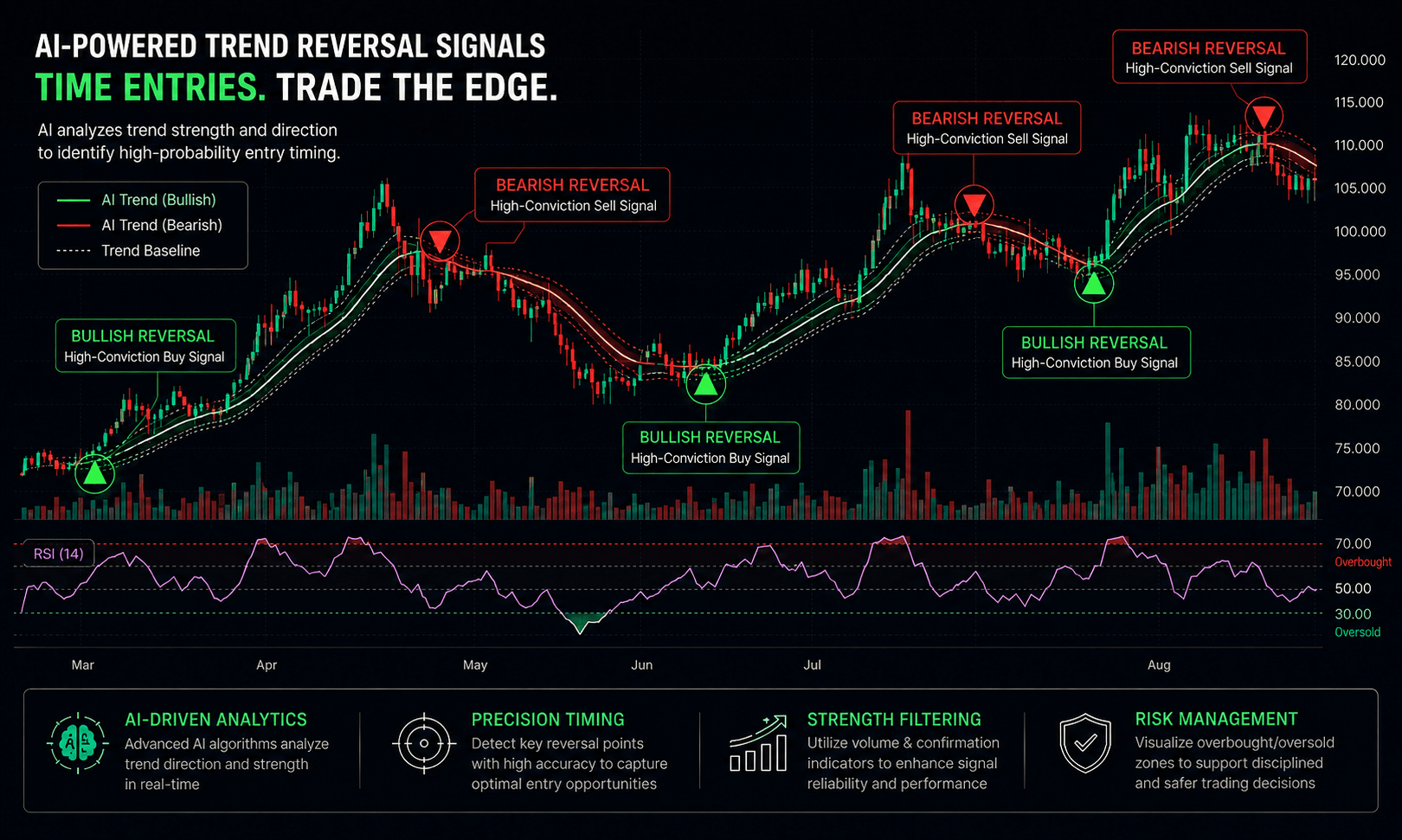
Bull Wave / Bear Wave Forecast Model
Engineered to help you read market direction and momentum faster than the crowd.
- Instantly separate bullish momentum from bearish pressure
- Pinpoint high-probability entry zones with confidence
- Chart signals clear enough for beginners, sharp enough for pros
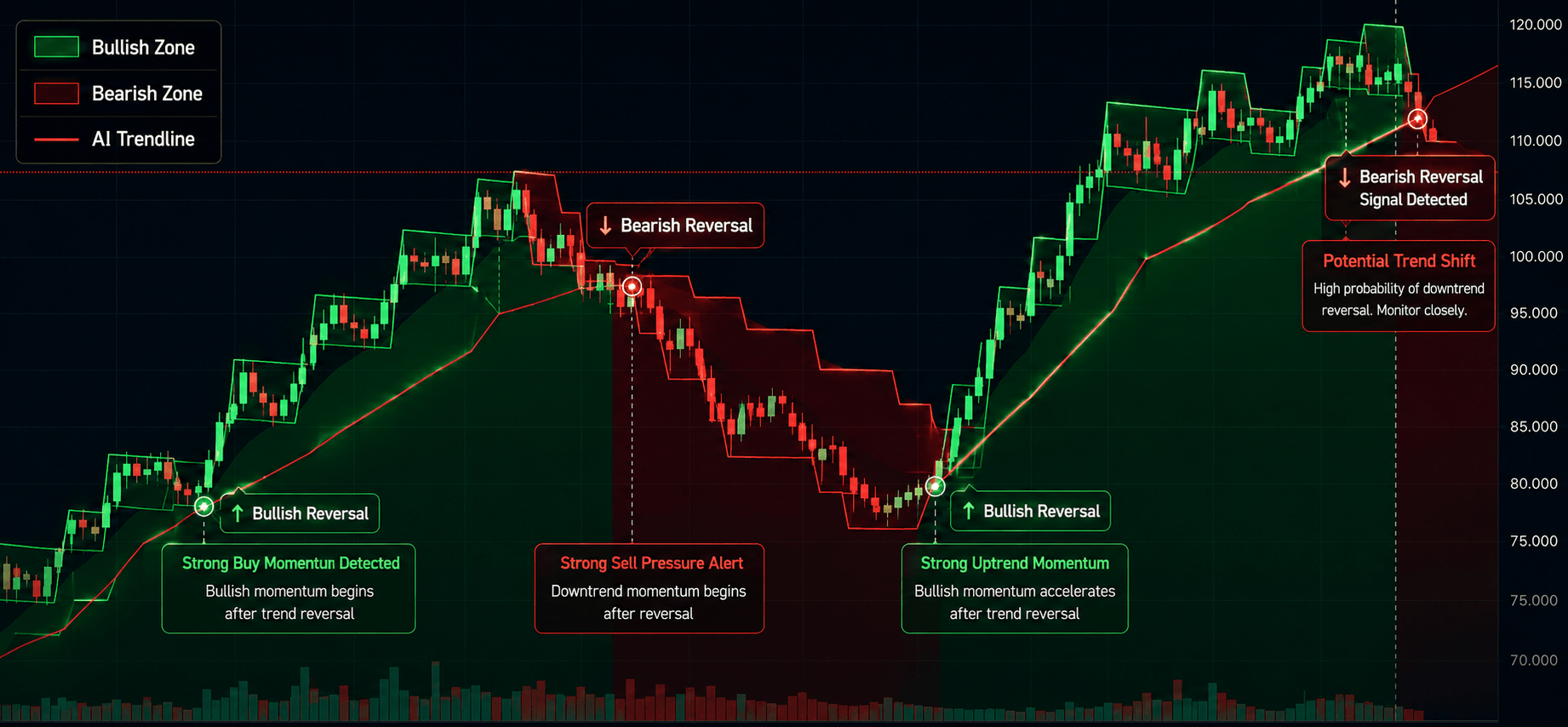
Winning Pattern Detection
Instantly surfaces the high-probability setups that repeat across the charts — a trusted edge for timing your entries and exits.
- Spot momentum building in real time
- Catch trend-reversal points before they break
- Built for active traders who need results, not theory

AI Live Economic Dashboard
AI analyzes real-time market data — turning complex, global investment flows into clear insight in seconds.
- Track global stock markets in real time
- See exactly which assets are strong — and which are fading
- Watch how geopolitical events move the markets
About the Author