What Is a Stock Split?
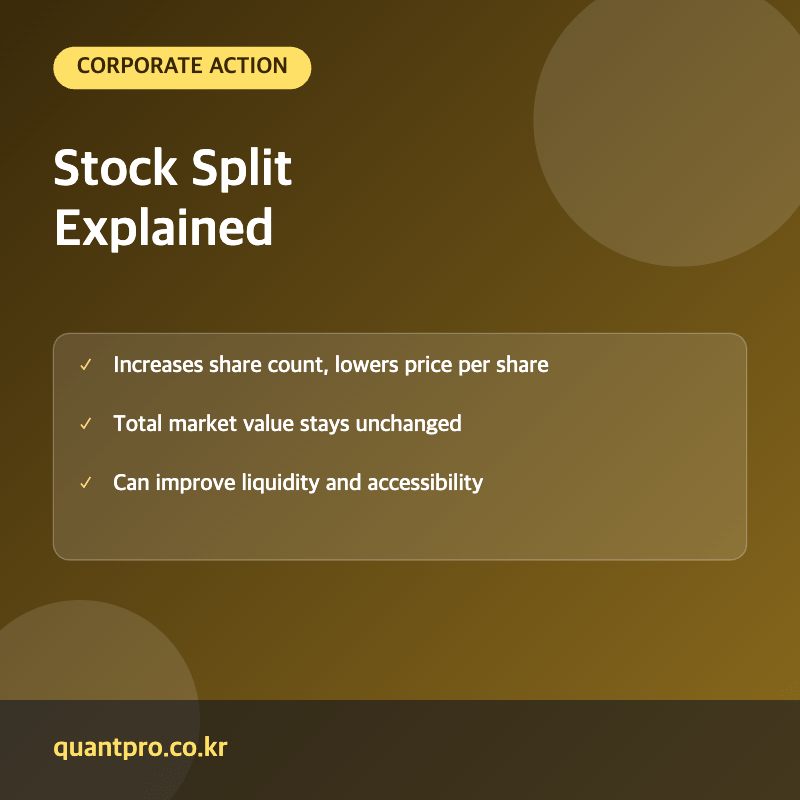
A stock split is a corporate action in which a company increases its number of outstanding shares by issuing additional shares to existing shareholders, while proportionally reducing the price per share so that the total market value of the company remains unchanged. In a common 2-for-1 split, for example, each shareholder receives one additional share for every share they already own, and the stock price is halved.
Because a split doesn’t change the company’s underlying fundamentals, revenue, or total market capitalization, it is often described as a purely cosmetic change — though it can still have practical effects on trading behavior and accessibility.
Why Companies Perform Stock Splits
Companies often split their stock after a sustained price increase makes shares expensive in nominal terms, since a lower per-share price can make the stock more accessible to smaller retail investors and may improve trading liquidity by increasing the number of shares available. Some companies also believe a lower share price psychologically appeals to a broader base of investors, even though the underlying value hasn’t changed.
Stock Splits vs. Reverse Stock Splits
A reverse stock split works in the opposite direction, reducing the number of outstanding shares and proportionally increasing the price per share — often used by companies whose stock price has fallen significantly, sometimes to meet minimum listing price requirements on an exchange or to improve the stock’s perceived image.
| Action | Effect on Share Count | Common Motivation |
|---|---|---|
| Forward Stock Split (e.g., 2-for-1) | Increases share count | Lower price per share, improve accessibility and liquidity |
| Reverse Stock Split (e.g., 1-for-10) | Decreases share count | Raise share price, often to meet exchange listing requirements |
| No Split | Share count unchanged | Company maintains its current share structure |
Frequently Asked Questions
Does a stock split make an investment more valuable?
No, a stock split does not change the total value of an investor’s holding — the number of shares increases while the price per share decreases proportionally, leaving the total dollar value unchanged immediately after the split.
Why do stock prices sometimes rise after a split announcement?
A split announcement can generate positive investor sentiment or signal management’s confidence in future growth, sometimes leading to short-term price gains, though this reflects market psychology rather than any change in intrinsic value from the split itself.
What happens to dividends after a stock split?
Total dividend payments to a shareholder generally remain proportional — if a company pays a per-share dividend, that amount is typically adjusted downward after a split so that the total dividend income for existing shareholders stays consistent.
Is a reverse stock split a bad sign for a company?
It can sometimes signal that a stock has struggled and needs to boost its share price to avoid delisting, though not all reverse splits indicate distress — some are done for strategic reasons unrelated to poor performance.
Key Takeaways
A stock split increases the number of shares outstanding and proportionally lowers the price per share without changing a company’s total market value, often used to improve accessibility and liquidity, while a reverse split works in the opposite direction. This article is for informational purposes only and does not constitute investment advice.

QuantPro: AI Finds the Trade Before You Do
From AI-powered chart analysis to real-time market intelligence — everything a serious investor needs, in one platform.
- Automated AI chart analysis with precision trend timing
- Bull Radar: real-time visualization of geopolitical & economic shifts
- Live market-moving news and insights, curated for you
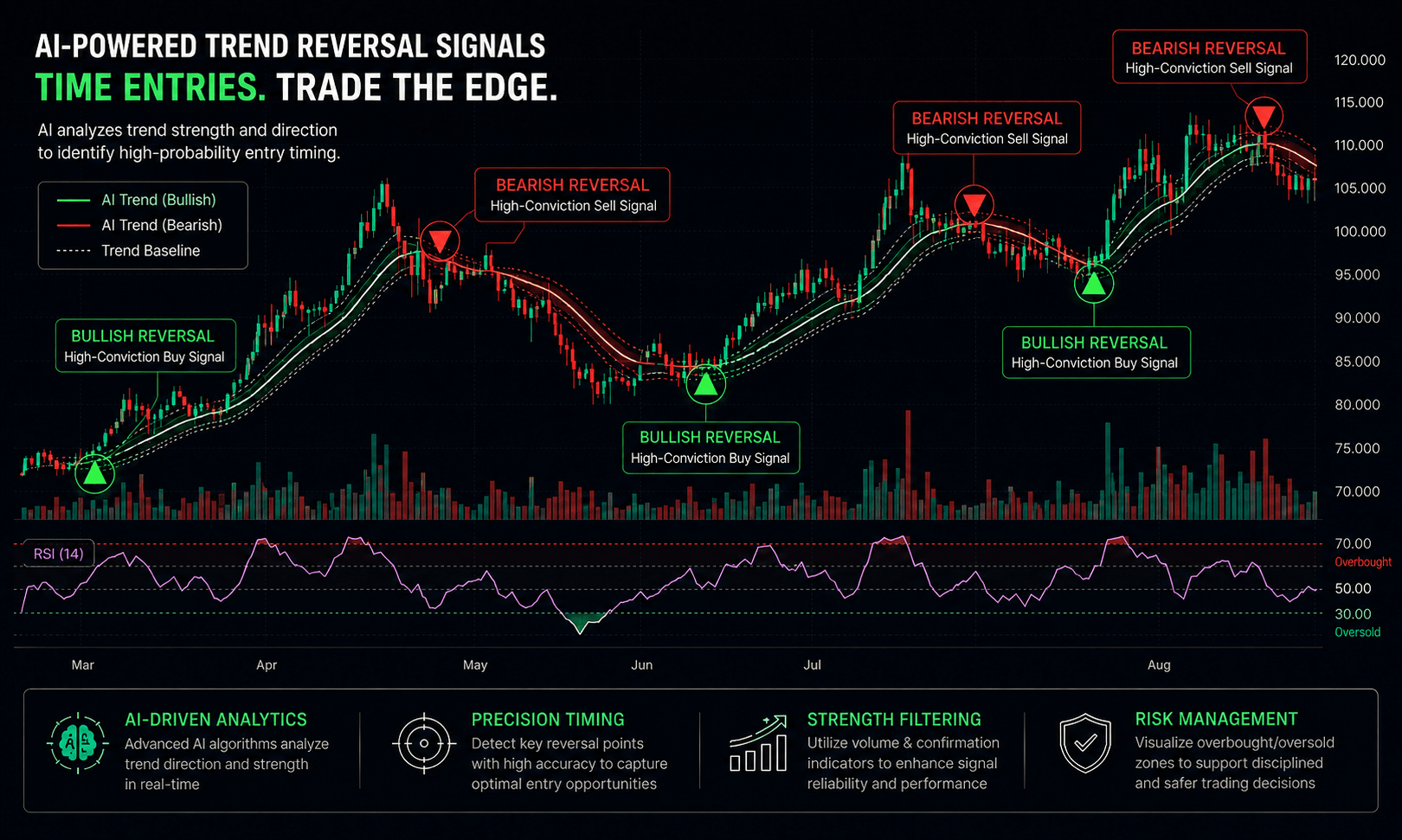
Bull Wave / Bear Wave Forecast Model
Engineered to help you read market direction and momentum faster than the crowd.
- Instantly separate bullish momentum from bearish pressure
- Pinpoint high-probability entry zones with confidence
- Chart signals clear enough for beginners, sharp enough for pros
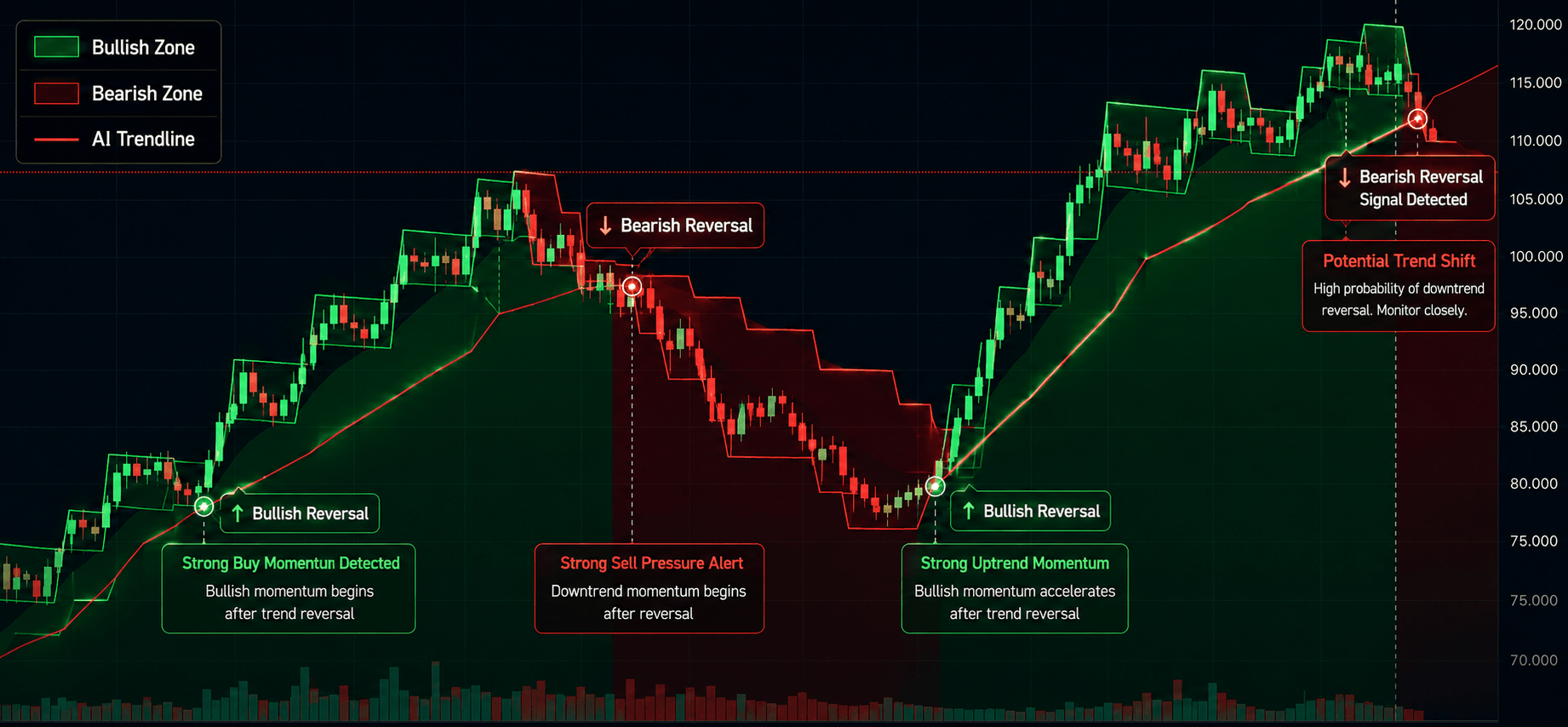
Winning Pattern Detection
Instantly surfaces the high-probability setups that repeat across the charts — a trusted edge for timing your entries and exits.
- Spot momentum building in real time
- Catch trend-reversal points before they break
- Built for active traders who need results, not theory
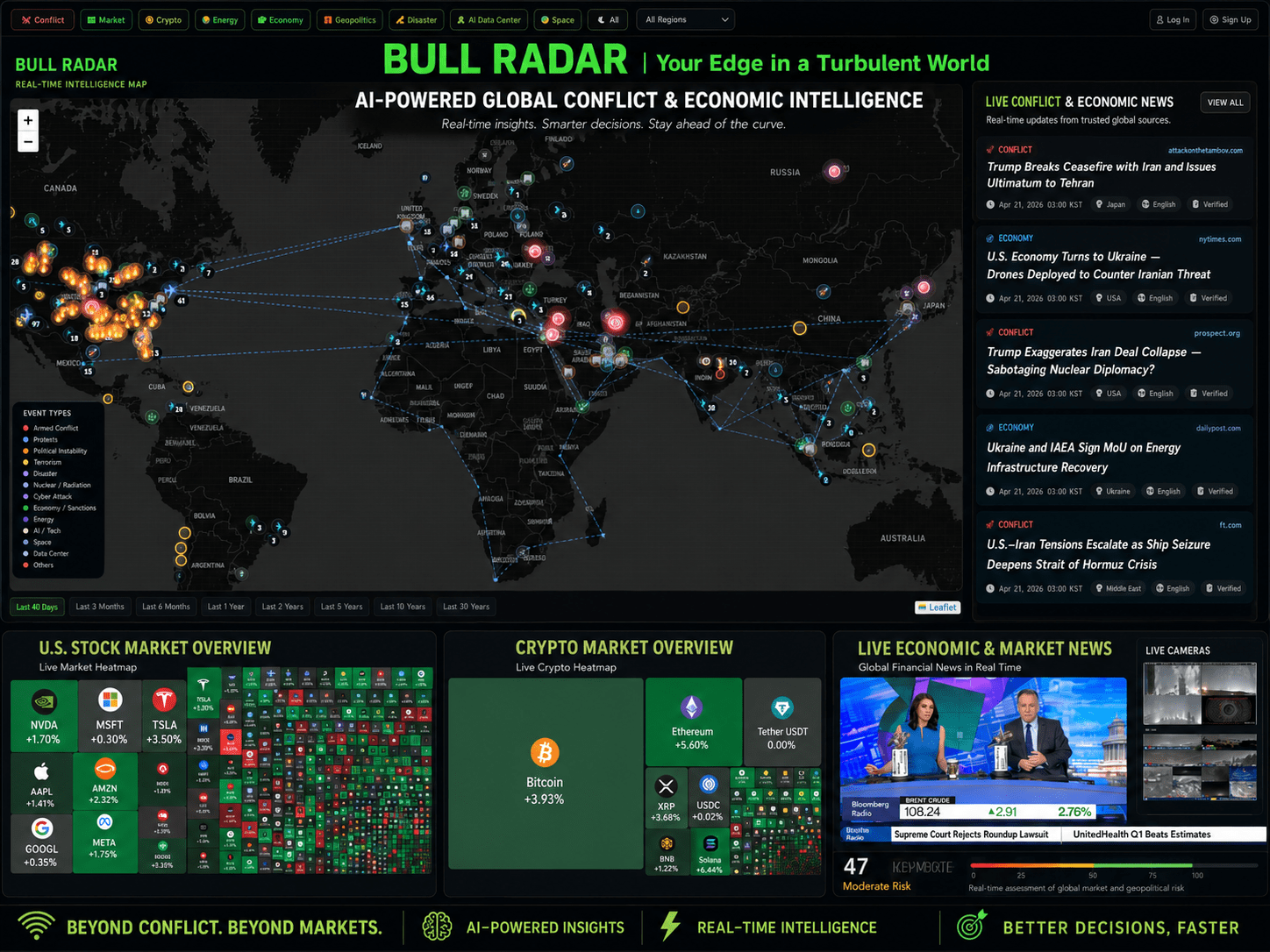
AI Live Economic Dashboard
AI analyzes real-time market data — turning complex, global investment flows into clear insight in seconds.
- Track global stock markets in real time
- See exactly which assets are strong — and which are fading
- Watch how geopolitical events move the markets
About the Author