What Is a Yield Curve Inversion?
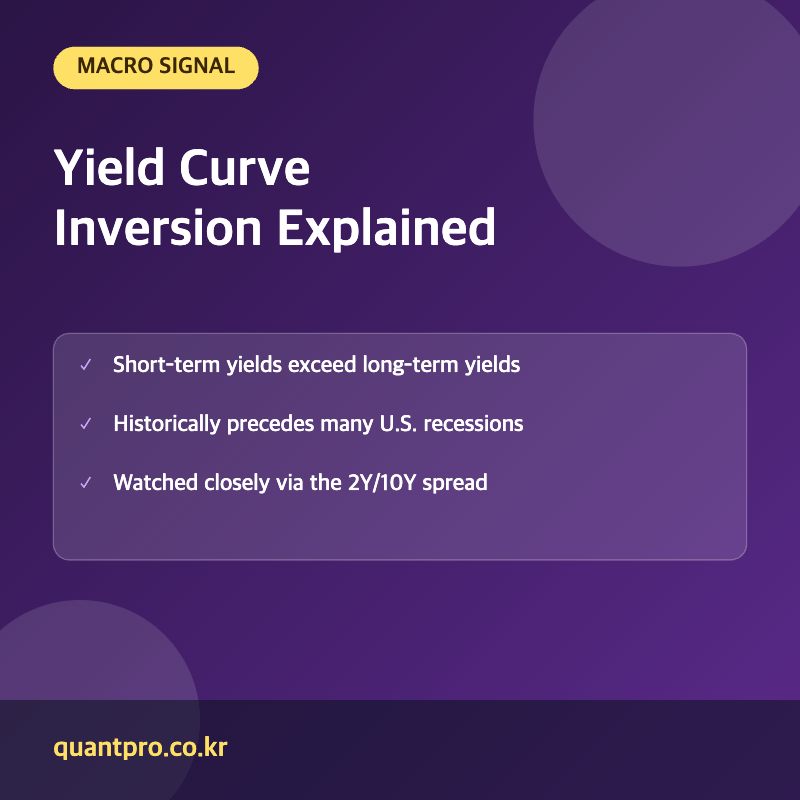
A yield curve inversion occurs when short-term government bond yields rise above long-term bond yields, reversing the normal relationship where longer-maturity bonds typically offer higher yields to compensate investors for greater time-based risk. The most closely watched inversion in the U.S. compares the 2-year and 10-year Treasury yields, though other maturity pairs are also monitored.
Under normal conditions, the yield curve slopes upward because investors generally demand higher compensation for tying up their money over longer periods. An inversion signals that investors expect economic conditions, and therefore interest rates, to weaken or fall in the future.
Why Yield Curve Inversions Are Watched Closely
Yield curve inversions, particularly the 2-year/10-year spread, have preceded most U.S. recessions over the past several decades, making the indicator one of the most closely monitored macroeconomic signals by economists, policymakers, and investors alike. An inversion often reflects market expectations that the central bank will need to cut interest rates in the future to counter slowing economic growth.
Limitations as a Predictive Signal
While historically reliable, yield curve inversions do not predict the exact timing of a recession, and the lag between inversion and any subsequent economic downturn has varied significantly across past cycles, sometimes extending well over a year. Some economists also caution that structural changes in bond markets could reduce the indicator’s predictive power going forward compared to historical patterns.
| Yield Curve Shape | What It Typically Signals | Market Interpretation |
|---|---|---|
| Normal (upward sloping) | Healthy expected growth | Long-term yields exceed short-term yields as usual |
| Flattening | Slowing growth expectations building | Gap between short and long-term yields narrowing |
| Inverted | Rate cuts and slower growth expected | Short-term yields exceed long-term yields |
Frequently Asked Questions
Does a yield curve inversion guarantee a recession?
No, while it has historically been a reliable warning signal, an inversion does not guarantee a recession will follow, nor does it specify how soon one might occur — some inversions have not led to a recession at all.
Why does the yield curve normally slope upward?
Investors typically demand higher yields on longer-maturity bonds to compensate for the greater uncertainty and inflation risk associated with tying up capital over a longer time horizon, which produces the normal upward slope.
Which yield spread is most commonly referenced?
The 2-year versus 10-year Treasury yield spread is the most widely cited inversion indicator in financial media, though economists also track other spreads, such as the 3-month versus 10-year spread, which some studies suggest have their own predictive value.
How long after an inversion has a recession historically followed?
The lag has varied significantly across past cycles, ranging from several months to well over a year, which is why the yield curve is treated as a directional warning sign rather than a precise timing tool.
Key Takeaways
A yield curve inversion occurs when short-term bond yields exceed long-term yields, historically serving as one of the more reliable early warning signals for economic slowdowns, though it does not predict the exact timing or certainty of a recession. This article is for informational purposes only and does not constitute investment advice.

QuantPro: AI Finds the Trade Before You Do
From AI-powered chart analysis to real-time market intelligence — everything a serious investor needs, in one platform.
- Automated AI chart analysis with precision trend timing
- Bull Radar: real-time visualization of geopolitical & economic shifts
- Live market-moving news and insights, curated for you
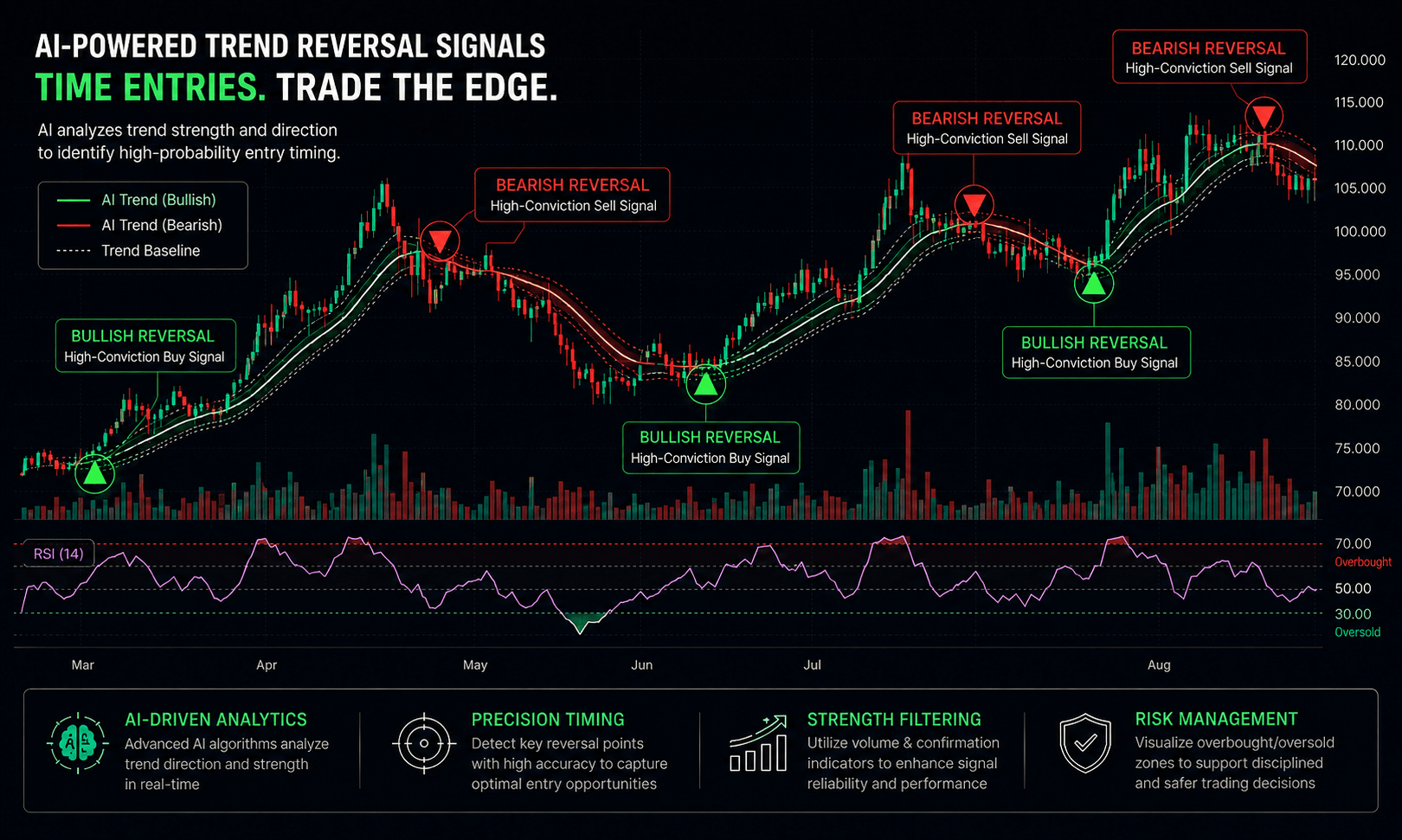
Bull Wave / Bear Wave Forecast Model
Engineered to help you read market direction and momentum faster than the crowd.
- Instantly separate bullish momentum from bearish pressure
- Pinpoint high-probability entry zones with confidence
- Chart signals clear enough for beginners, sharp enough for pros
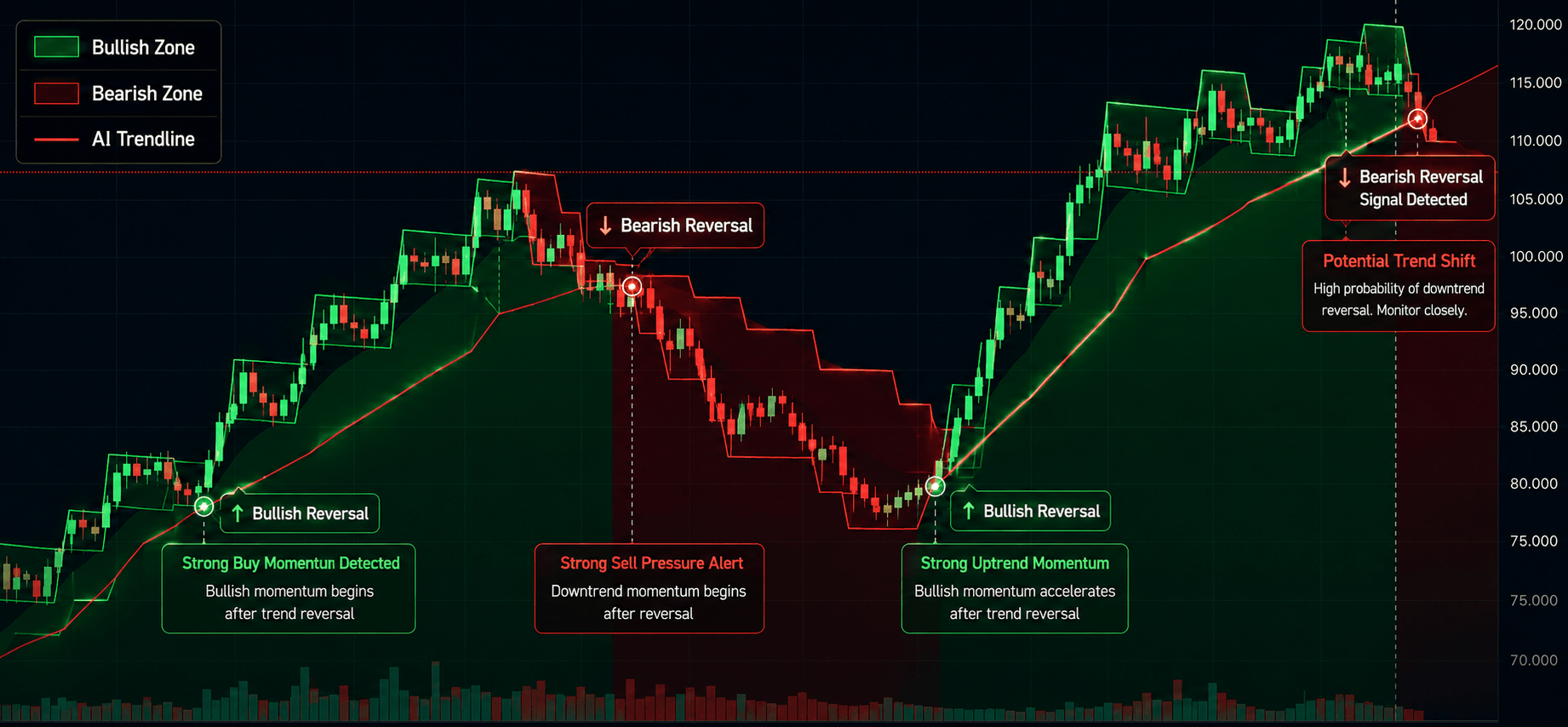
Winning Pattern Detection
Instantly surfaces the high-probability setups that repeat across the charts — a trusted edge for timing your entries and exits.
- Spot momentum building in real time
- Catch trend-reversal points before they break
- Built for active traders who need results, not theory

AI Live Economic Dashboard
AI analyzes real-time market data — turning complex, global investment flows into clear insight in seconds.
- Track global stock markets in real time
- See exactly which assets are strong — and which are fading
- Watch how geopolitical events move the markets
About the Author